Product Overview
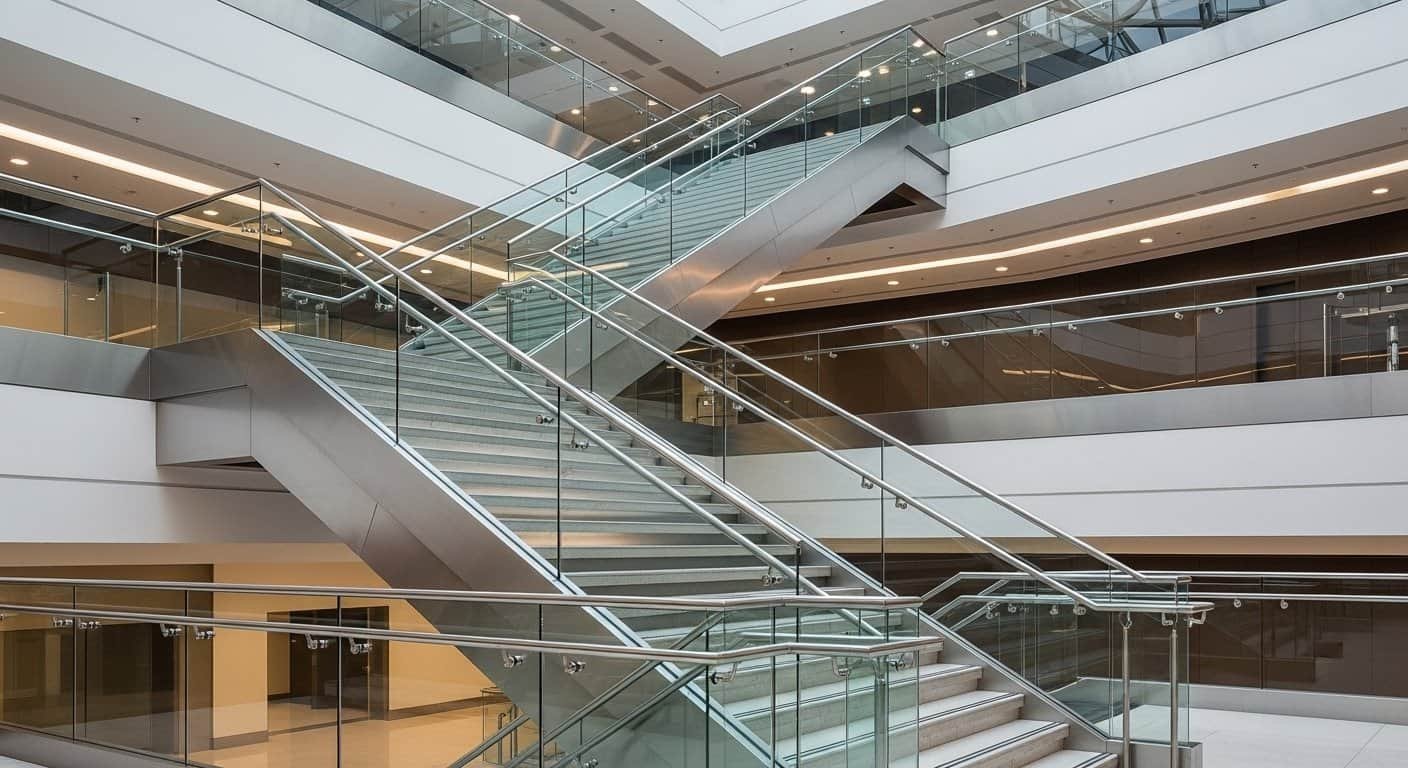
Railings India manufactures commercial railing and glazing systems from our Hyderabad production facility for B2B buyers -- builders, developers, EPC contractors, PMC consultants, architects and procurement teams. Scope covers glass railings, glass balustrades, glass handrails, frameless and semi-frameless systems, base-shoe and spigot packages, stainless steel railings, balcony and staircase railings, and industrial safety railings.
Hyderabad is both our production base and a major commercial construction market. Demand concentrates in west-corridor IT and office developments, high-rise residential programmes, healthcare and hospitality projects, metro and airport infrastructure packages, and industrial estates along the ORR belt. These programmes need specification-grade guards with structural documentation -- not retail catalogue railings.
For company capability statements, compliance documentation types and portfolio context, see manufacturer credentials and projects.
Why Choose Railings India
- Hyderabad production facility -- systems are manufactured in-house; core fabrication is coordinated under one production process.
- Engineering documentation -- IS 875 Parts 3 & 5 calculation summaries, NBC 2016 height statements, material test certificates and shop drawings for commercial orders.
- Commercial sector coverage -- IT parks, high-rise developments, healthcare facilities, hospitality, airports, metro infrastructure and industrial plants.
- Single-source BOQ options -- glass, stainless steel, aluminium railings and industrial guards for mixed-use campuses.
- Local dispatch coordination -- phased delivery aligned to Hyderabad--Secunderabad and ORR project programmes.
Why Builders Across India Choose Railings India
Hyderabad builders and contractors need railing partners who can keep pace with tower phasing, consultant revisions and authority documentation. Railings India supports that programme reality with factory-manufactured systems and structured project assistance:
- Factory manufactured systems -- glass and stainless assemblies produced from our Hyderabad production facility.
- Engineering assistance -- load class and fixing discussion against IFC guard details and IS 875 (Part 3) project-specific design .
- BOQ review -- alignment of glass make-up, steel grade and fixing typology before order release.
- Shop drawings -- DWG/PDF issued for approval before production freeze.
- Material recommendations -- SS304 vs SS316 and toughened vs laminated selection by exposure and sector.
- Custom fabrication -- profiles, finishes and dimensions per approved drawings.
- Delivery coordination -- floor/wing phased dispatch matched to slab handover where programmed.
- Installation support -- method-statement alignment and site coordination for projects.
Procurement Support for EPC & PMC Teams
Procurement and contracts teams on commercial programmes use the following support sequence to lock railing scope before glass mark and steel order:
- BOQ review -- line-item check against drawings; split interior/exterior grades where needed.
- Quantity estimation -- running-metre and panel counts from IFC or GA drawings for tender packages.
- Material selection -- glass type/thickness and SS304/SS316 map by zone (dry core vs podium vs wet).
- Technical consultation -- fixing method feasibility for slab edge, fascia and stringer conditions.
- Shop drawings -- approval cycle before fabrication.
- Tender support -- compliance note formats (NBC / IS 875 / MTC) for technical bid packs.
- Value engineering -- alternate fixing or glass make-up options that preserve safety class while controlling cost on repeating typologies.
Why Glass Railings in Hyderabad
On HITEC City, Madhapur, Gachibowli, Financial District and Kokapet programmes, architects specify glass balustrades and frameless balcony guards to keep sell-face views and atrium sightlines open while meeting NBC guard heights. Glass systems also simplify cleaning versus dense metal balustrades in dusty summer conditions.
Hyderabad is inland. Chloride-driven coastal corrosion is not the primary risk. Material choice still splits by exposure: SS304 for dry conditioned interiors; SS316 for exterior podiums, pools, wash-down and clinical wet zones. External glass on G+ towers must be calculated for IS 875 Part 3 Wind project-specific wind design (project SE confirmed basic wind speed) plus guard imposed loads.
Glass thickness and fixing method are locked from structural calculation and IFC typical details -- not from a single catalogue SKU.
Industries We Serve
Each industry brings different code, hygiene, load and finish priorities. BOQ review and shop drawings confirm the correct system family before fabrication for programmes across India.
Cities We Serve
Railings India fabricates and supplies railing systems for commercial, institutional and industrial programmes across India. Project teams in major metros and growth cities typically engage us for BOQ review, material selection, shop drawings and factory fabrication before site installation.
Cities we regularly support include Hyderabad, Bengaluru, Chennai, Mumbai, Pune, Delhi NCR, Ahmedabad, Surat, Jaipur, Lucknow, Kolkata, Vijayawada, Visakhapatnam, Kochi, Coimbatore and Nagpur -- along with satellite towns and industrial corridors serving those metros.
Nationwide supply does not imply a local branch in every city. Engineering consultation, documentation and fabrication are coordinated from our Hyderabad production facility, with dispatch and installation support aligned to each project's programme.
States We Serve
- Telangana -- Hyderabad and surrounding industrial / IT corridors.
- Andhra Pradesh -- Vijayawada, Visakhapatnam and coastal / inland commercial programmes.
- Karnataka -- glass railings in Bengaluru and adjoining industrial belts.
- Tamil Nadu -- glass railings in Chennai, Coimbatore and institutional campuses.
- Kerala -- Kochi and commercial hospitality corridors.
- Maharashtra -- glass railings in Mumbai, Pune, Nagpur and western industrial estates.
- Gujarat -- Ahmedabad, Surat and manufacturing hubs.
- Odisha / West Bengal -- Bhubaneswar corridor and Kolkata commercial programmes as project schedules require.
- Delhi NCR -- glass railings in Delhi NCR, Gurugram, Noida and adjoining institutional / commercial packages.
State coverage is demand-led. We do not claim warehouses or sales offices in every state -- only factory-backed supply and documentation for awarded programmes.
Nationwide Manufacturing & Supply
Railings India manufactures railing and related architectural metal / glass systems from our Hyderabad production facility for projects across India. We do not claim a branch network in every city -- we claim factory fabrication, engineering documentation and coordinated supply against approved drawings.
In-house cutting, welding, finishing and assembly to approved shop drawings.
Line-item review before order release to reduce site variation.
System selection against NBC 2016 and IS requirements confirmed on project drawings.
Fabrication and fixing drawings for PMC / consultant approval.
Glass, SS, aluminium, MS/HDG and hybrid packages matched to environment.
In-process checks before dispatch. Independent lab testing: VERIFICATION REQUIRED where claimed.
Dispatch and phased delivery aligned to contractor programmes across India.
Sequencing with civil, facade and interior trades on multi-block sites.
Quotations, schedules and handover packs for EPC / PMC procurement files.
Industries Served
Final system selection follows consultant IFC details.
Commercial Offices
Atrium glass balustrades, terrace guards and core stair packages for Grade-A towers in Gachibowli, Raidurg and Financial District.
IT Parks
Podium, cafeteria deck and lobby frameless systems across HITEC City and Madhapur campuses. Guide: IT park railing systems.
Hospitals & Healthcare Facilities
Corridor and ramp handrails, wipe-down stainless finishes, laminated glass where retention is scheduled. Healthcare railings.
Hotels & Hospitality Projects
Lobby frameless glass, feature stairs, pool and podium edges with SS316 hardware where exposure requires it.
Shopping Malls
Void-edge glass balustrades with public-assembly load consideration and laminated make-ups where specified.
Airports
Shamshabad airport-belt packages -- laminated or toughened-laminated glass and SS316 in wash-down zones where specified. Airport railing systems.
Metro Infrastructure
Station concourse and platform handrails with crowd-load documentation as required by the project specification.
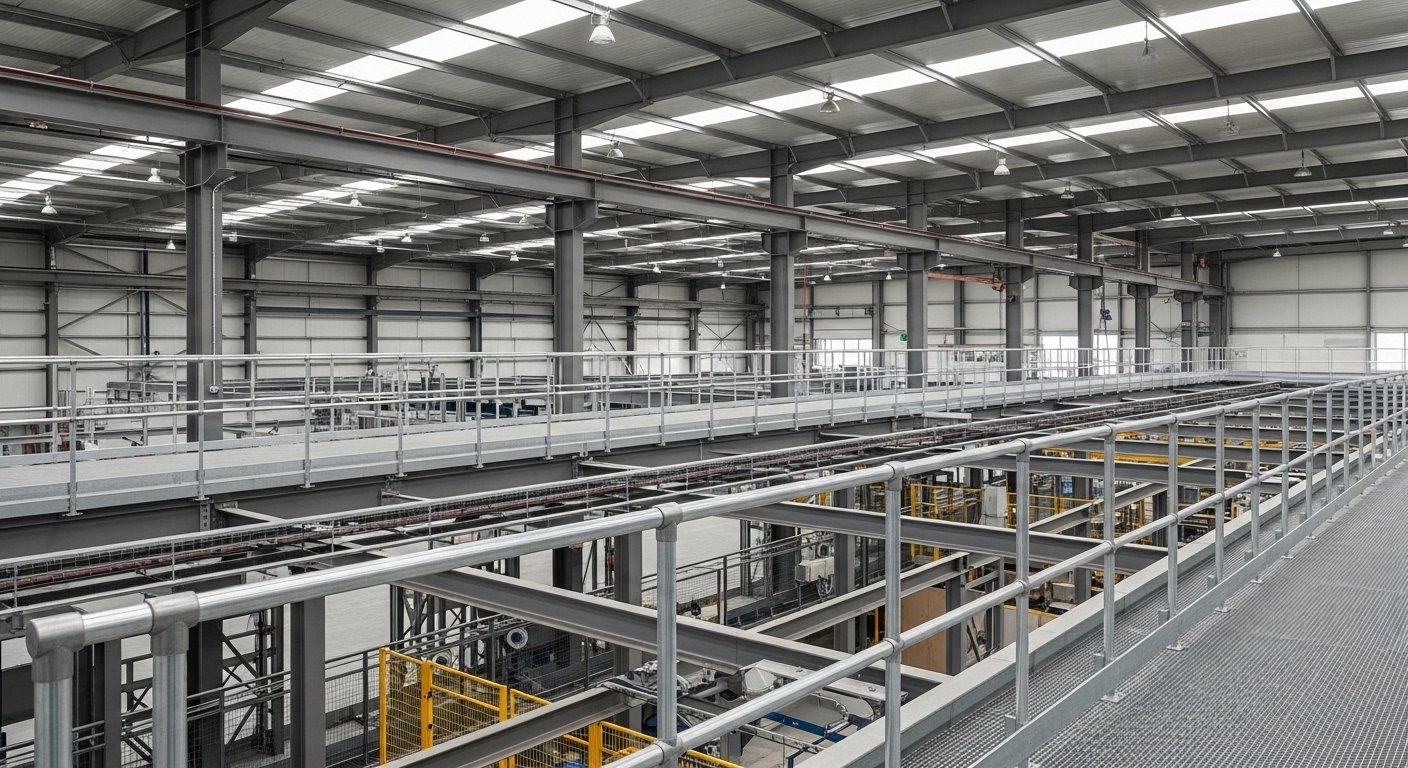
Industrial Facilities
Mezzanine and platform guards for Jeedimetla, Patancheru, Bollaram and related industrial estates. Industrial safety railings.
Educational Campuses
Stair and corridor packages with consistent satin finishes and NBC statements per building.
High-rise Developments
Balcony glass with project-specific wind design wind calculations and repeating typology dispatch for west-corridor towers. High-rise railing systems.
Glass Railing Systems
Architectural glass railing and glass balustrade packages from our Hyderabad production facility. Hub: glass railings.
Frameless Systems
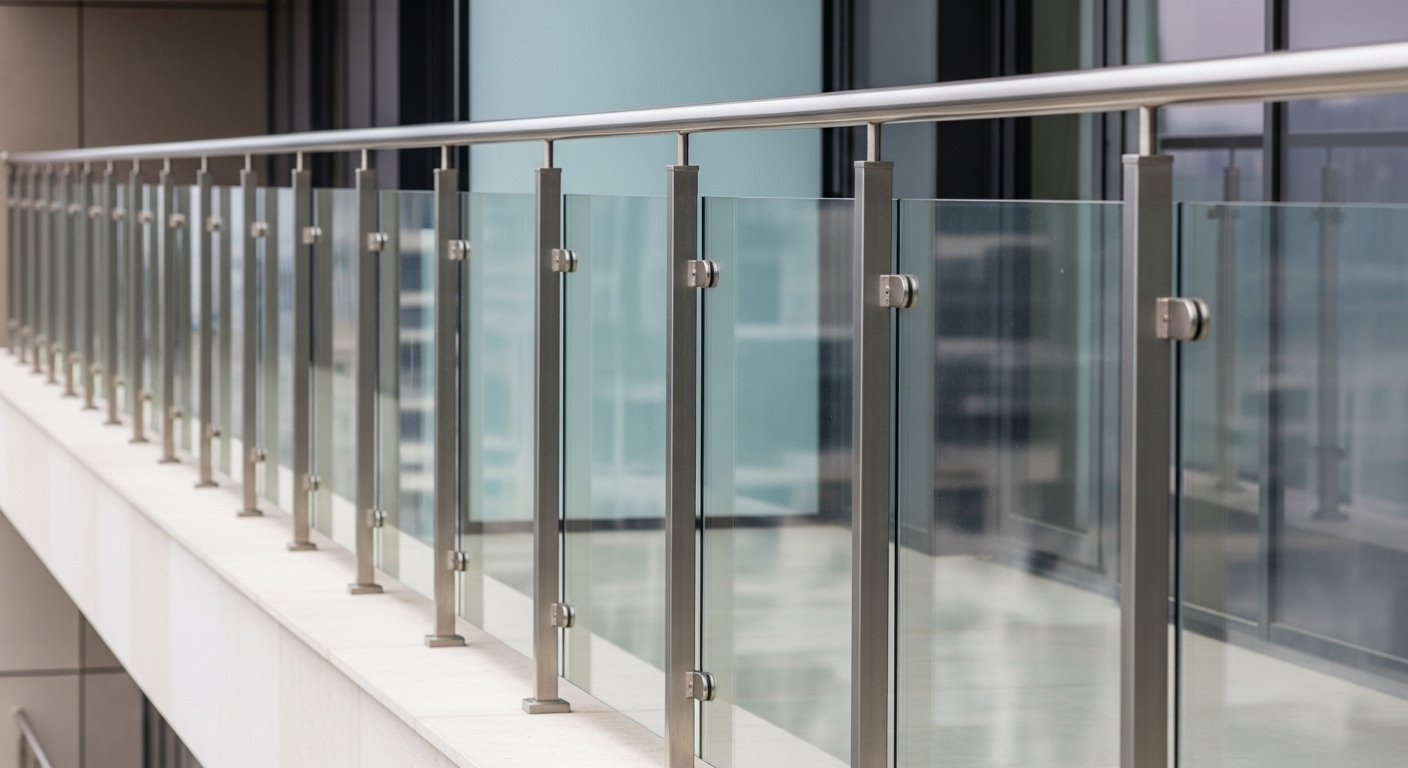
Minimal visible posts for sell-face balconies and feature atria. Typical 12 mm+ toughened per calculation. Frameless glass railing system.
Base Shoe
Continuous shoe for long podium and balcony runs. Base shoe glass railing.
Spigot
Point-fixed stainless spigots for lobbies and voids; exterior typically SS316. Spigot glass railing.
Standoff
Standoff buttons for side-mount or through-glass details -- locked on IFC before glass order.
Balcony Railings
High-rise balcony packages with wind and guard documentation. Balcony railings.
Staircase Railings
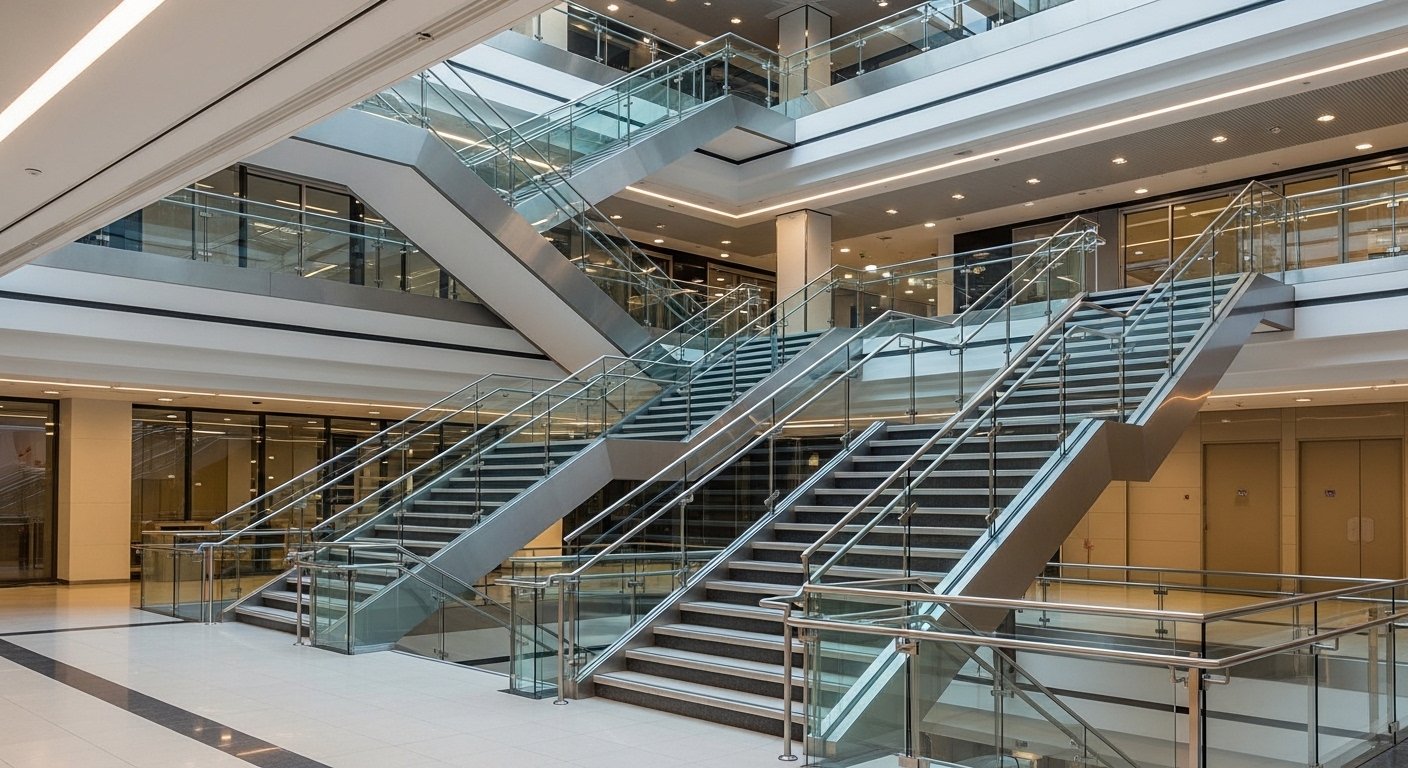
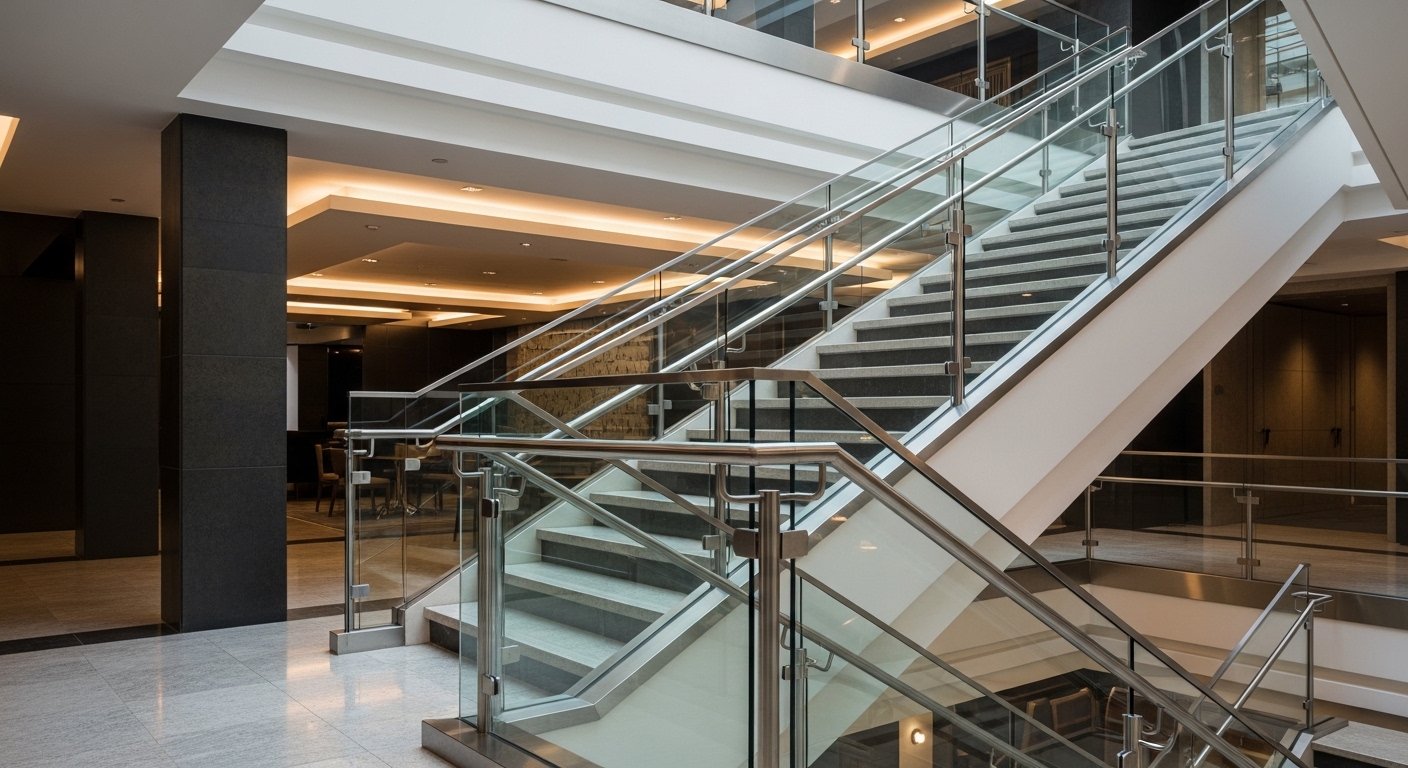
NBC stair guards, glass handrails and continuous handrails. Staircase railings / Handrails.
Stainless Steel Railings
SS304 / SS316 post-and-rail and post-and-glass for cores, healthcare and commercial stairs. Stainless steel railings.
Industrial Safety Railings
Mezzanine and platform guards for industrial facilities. Industrial safety railings.
System Comparison
Selection aid for architects and PMC -- confirm on IFC typical details.
| System | Best For | Advantages | Typical Projects | Maintenance |
|---|---|---|---|---|
| Base Shoe | Long balcony / podium runs | Continuous edge; clean frameless look | High-rise developments, IT podiums | Clean glass; check shoe drainage / silicone |
| Spigot | Feature lobbies and voids | Point fixings; open sightlines | Commercial offices, hospitality | Torque-check spigots; non-chloride SS clean |
| Standoff | Side-mount / faade-adjacent glass | Flexible mounting on wall or stringer | Atria, feature stairs | Inspect standoff bushings and seals |
| SS Railings | Cores, healthcare, high-traffic stairs | Durable; wipe-down finishes | Hospitals, offices, metro circulation | Satin wipe; avoid chlorides |
| Glass + SS | Semi-frameless corridors and malls | Post support reduces panel span | Shopping malls, campus blocks | Clean glass + inspect clamps |
Technical Specifications
Indicative matrix for discussion. Confirm thickness, grade and fixing on project calculations and IFC drawings.
| Glass Thickness | Glass Type | Steel Grade | Finish | Application | Recommended Fixing | Building Type | Maintenance |
|---|---|---|---|---|---|---|---|
| 12--15 mm | Toughened IS 2553 | SS304 int. / SS316 ext. | Satin | Sell-face balcony | Base shoe / frameless | High-rise developments | Non-abrasive glass clean; monsoon hardware check |
| 12--15 mm | Toughened | SS316 | Satin / mirror lobby | Atrium / lobby | Spigot / standoff | IT parks / commercial offices | Quarterly torque check on point fixings |
| 10--12 mm | Toughened | SS304 | Satin | Corridor semi-frameless | Post-and-glass | Offices / malls | Wipe SS; inspect clamps |
| 12--15 mm + PVB | Laminated / TL IS 16613 | SS316 | Satin | Public void / aviation | Base shoe / channel | Airports / healthcare public | Non-chloride cleaners; edge seal inspect |
| N/A (metal) | -- | SS304 / SS316 | Satin | Core stair / handrail | Base plate / wall return | All commercial cores | Avoid chlorides on stainless |
| Optional infill | Toughened if used | Structural / CRCA or SS | Paint / HDG / satin | Mezzanine guard | Post base / kick plate | Industrial facilities | Coating and impact inspection |
Materials
SS304
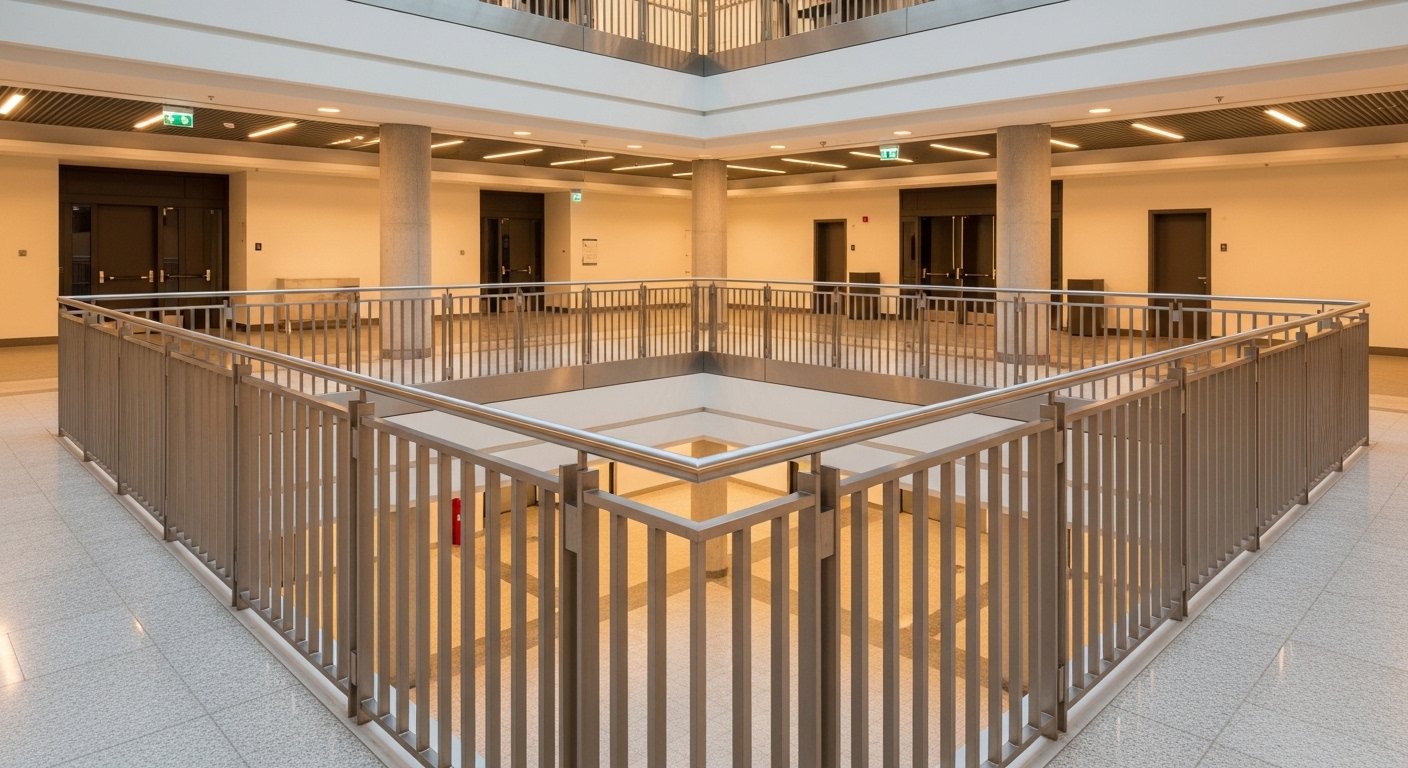
Default for dry interiors -- office atria, conditioned corridors, classroom wings. Mill test certificates per batch on commercial orders.
SS316
Exterior terraces, pools, clinical wet areas, wash-down and food courts. Inland durability choice -- not coastal-only. Guide: SS304 vs SS316.
Glass Types & Thickness
Toughened (IS 2553 Part 1), laminated and toughened-laminated (IS 16613). Thickness from calculation -- commonly 10--15 mm; 12 mm minimum typical for frameless sell-face.
Hardware & Finishes
Spigots, shoes, channels, standoffs, clamps. Finishes: satin (most commercial), mirror (feature interiors), powder coat where specified. Batch consistency locked across multi-tower programmes.
Manufacturing, Quality Control, Inspection & Testing
Systems are manufactured from our Hyderabad production facility. Core process stages:
- Manufacturing -- cutting, forming, TIG welding (stainless), finishing and glass panel coordination.
- Quality control -- incoming material certificate checks; weld/finish checks; dimensional check to stamped drawing.
- Inspection -- pre-dispatch packing inspection for phased loads.
- Testing / certificates with orders -- glass processor compliance references, steel mill test certificates and signed IS 875 summaries as applicable. Third-party inspection when the tender requires it.
Additional company capability detail: manufacturer credentials. Factory floor photography: MEDIA RECOMMENDED.
Standards -- NBC, IS Codes, Wind Load & Fire Safety
NBC 2016 -- guard heights and openings per occupancy. Reference: NBC height guide. Documentation prepared for GHMC / HMDA technical review contexts on Hyderabad projects.
IS codes -- IS 875 Parts 3 & 5; IS 2553; IS 16613; IS 4270 / IS 4756 / IS 6911; IS 617; IS 800 / IS 2062 (industrial).
Wind load -- India project-specific wind design, project SE confirmed basic wind speed; external balcony glass calculated for height and terrain.
Fire safety -- standard architectural glass railings are not fire-rated compartmentation assemblies. Egress handrails follow NBC fire and egress rules. Fire-rated glass only when the tender specifies it. Fire-test inventory for specific SKUs: VERIFICATION REQUIRED.
Project Workflow
- Requirement Discussion -- sector, load class, finish and programme dates.
- Site Visit -- slab edge and fixing feasibility for sites (scheduled on enquiry).
- BOQ Review -- glass make-up, steel grade map, fixing typology.
- Shop Drawings -- approval before production freeze.
- Manufacturing -- from our Hyderabad production facility.
- Inspection -- dimensional, finish and packing checks.
- Dispatch -- floor/wing phased delivery where programmed.
- Installation Support -- method statement alignment through handover documentation.
Delivery & Installation Support
Delivery -- Greater Hyderabad--Secunderabad, ORR industrial belts and Shamshabad airport belt; pan-India from the Hyderabad production facility.
Installation support -- fixing per approved detail; glass edge protection during handling. Guide: glass railing installation guide. Site installation photography archive: MEDIA RECOMMENDED.
Maintenance
Cleaning & Glass Care
Use non-abrasive cloths and glass cleaners free of harsh grit. Avoid metal scrapers on coated or laminated edges. Rinse after dust storms common in Hyderabad summers.
Hardware Inspection
Check spigots, standoffs, clamps and shoe fasteners for looseness after monsoon and after any faade cleaning cycles. Re-torque to approved values where accessible.
SS304 Maintenance
Wipe with mild detergent and soft cloth. Avoid chloride bleach and hydrochloric acid cleaners -- they stain and pit SS304 in interior cores if misused.
SS316 Recommendations
Preferred on exterior podium, pool and wash-down zones. Still rinse chemical residues; inspect for tea-staining in sheltered humid pockets and polish if specified in the O&M note.
Replacement Support
Damaged panels should be replaced using marked batch dimensions from shop drawings. Do not mix thickness or interlayer types within one visual run without consultant approval.
Commercial Maintenance Schedule
- Monthly -- glass clean on occupied floors; visual check of handrail continuity.
- Quarterly -- hardware torque / clamp inspection on frameless and spigot systems.
- Pre- and post-monsoon -- exterior SS316 and shoe drainage inspection.
- Annual -- O&M review with facilities team; panel defect log for replacement planning.
FAQs -- Glass Railing Manufacturer Hyderabad
1. Do you manufacture in Hyderabad or only trade?
Systems are manufactured from our Hyderabad production facility for B2B commercial supply.
2. What documents support GHMC / HMDA technical review?
IS 875 calculation summaries, NBC height statements, material test certificates and approved shop drawings as applicable to the order.
3. Which wind zone applies to Hyderabad balcony glass?
IS 875 Part 3 project-specific wind design (project SE confirmed basic wind speed). Design pressure depends on height and terrain category.
4. Is SS316 mandatory in Hyderabad?
No. Hyderabad is inland. SS304 suits most dry interiors; SS316 for exterior, wet and wash-down zones per consultant schedules.
5. What glass thickness is used for frameless balconies?
Thickness follows structural calculation. Twelve millimetre toughened is a common starting point for frameless sell-face -- confirmed on drawings.
6. Do you supply base shoe, spigot and standoff systems?
Yes -- frameless, base shoe, spigot, standoff and post-and-glass, locked to the IFC typical detail.
7. Can delivery be phased for multi-tower programmes?
Yes. Floor or wing phased dispatch after typology lock is standard for high-rise programmes in areas such as Kokapet and Narsingi.
8. Do you cover Jeedimetla and Patancheru industrial sites?
Yes -- industrial safety railings for those estates, plus commercial systems across Greater Hyderabad.
9. Toughened vs laminated -- which for projects?
Toughened (IS 2553) for many balcony and IT applications; laminated or toughened-laminated (IS 16613) where fragment retention is on the safety schedule.
10. Do you only supply, or also support installation?
Fabrication plus installation support and method statements. On-site crew model is confirmed at BOQ stage.
11. Are shop drawings available before production?
Yes. Shop drawings are issued for approval before production freeze.
12. Are standard glass railings fire-rated?
No. They are not fire compartmentation assemblies. Fire-rated glass is only when the tender specifies it.
13. How do EPC teams start procurement support?
Share IFC drawings or BOQ via Get a Quote for BOQ review and technical consultation.
14. Do you supply aluminium railings as well?
Yes. See aluminium railings and related Hyderabad aluminium content where applicable.
15. Where can I see broader company credentials?
See manufacturer credentials, projects and case studies.
Related Products
Contact -- commercial Enquiry
Builders, EPC, PMC and architects: share IFC drawings or BOQ for quotation from our Hyderabad production facility. Structural calculation summaries and compliance documentation included as standard on commercial orders.
Get a Quote Contact