Quick Answer
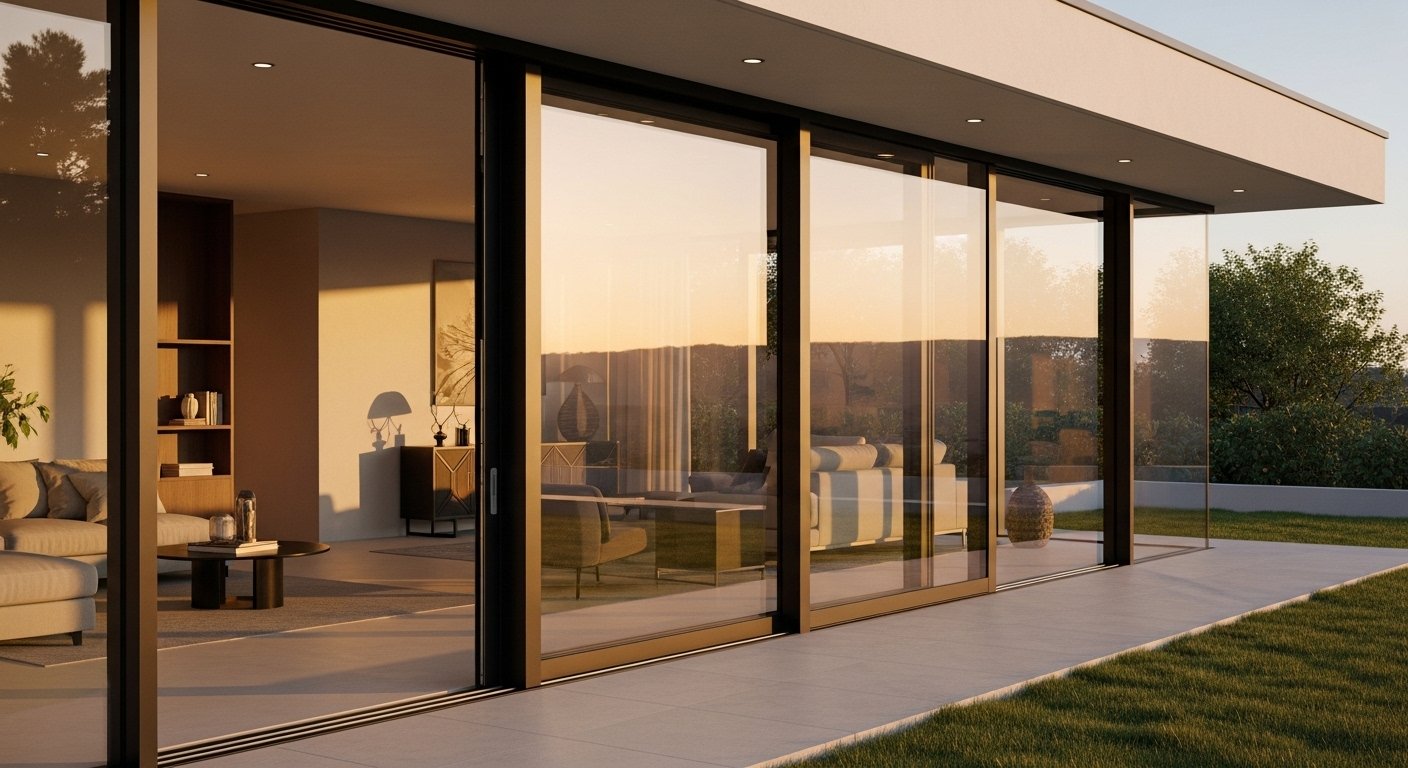
Aluminium sliding doors manufacturer India buyers specify Railings India for multi-track sliding systems on shop entries, terrace openings and office facades -- 6063-T5 frames with project-selected rollers, locks and glass build-up. We fabricate from our Hyderabad production facility. Related: aluminium sliding windows, aluminium folding doors, aluminium doors and windows.
Product Overview
Railings India manufactures aluminium sliding doors from our Hyderabad production facility for retail, hospitality and commercial programmes needing large clear openings with sliding operation.
Sliding door scope sits under aluminium doors and windows with dedicated comparison to aluminium folding doors bi-fold and aluminium casement windows casement families.
Shop front interface: aluminium shop frames. manufacturer credentials.
Applications
Sliding door applications on commercial programmes:
- Retail shop entries -- wide clear openings with security hardware.
- Terrace and balcony access -- multi-panel sliders to outdoor amenity.
- Office breakout openings -- internal-external connectivity on campus blocks.
- Hotel service entries -- back-of-house and pool-adjacent access doors.
- Restaurant frontages -- street-facing sliding glass entries.
- Warehouse office fronts -- personnel entries with aluminium sliders.
Product Types
Sliding door track configurations:
Single sliding panel with fixed lite typical.
Two sliding panels for wider clear openings.
Multiple panels for maximum opening width.
Heavy panels with lift hardware where specified.
Multi-point locks for shop front applications.
RAL colour matched to facade package.
Materials
Door materials confirmed on approved opening schedule:
- 6063-T5/T6 frames -- head, sill and jamb profiles.
- Roller and track hardware -- rated to panel weight on drawing.
- Glazing -- toughened or laminated per safety schedule.
- Locks and handles -- commercial grade sets per specification.
Technical Specifications
Project-specific values are confirmed on approved shop drawings -- not fixed catalogue SKUs.
| Material | Grade | Finish | Fixing Method | Application | Environment | Maintenance | Compliance |
|---|---|---|---|---|---|---|---|
| Shop front slider | 6063-T5 | Powder coat RAL | Floor-track / top-hung option | Retail entries | Exterior ground level | Track clean; roller inspect | Project safety glass schedule |
| Terrace slider | 6063-T5 | Powder coat | 2 or 3 track | Balcony access | Exterior exposed | Drainage at sill | NBC opening requirements (drawing) |
| Office slider | 6063-T5 | Anodise / powder coat | Top-hung or floor track | Breakout openings | Interior / semi-exterior | Hardware lubrication cycle | Acoustic spec if scheduled |
Manufacturing Process
Sliding doors assembled at Hyderabad to approved opening sizes:
- Drawing lock -- opening sizes, profile stack and hardware approved.
- Extrusion cut -- frames and sashes to schedule.
- Assembly -- hardware, gaskets and glazing prep.
- QC -- operation and finish check.
- Dispatch -- protected packing per crate.
Quality Control
- Extrusion profile and finish checked to PO.
- Hardware kit verified per opening.
- Glazing gasket and bead check.
- Operation test before dispatch where pre-assembly scope applies.
- Packing inspection.
Independent lab tests beyond mill or processor MTCs: VERIFICATION REQUIRED per project requirement.
Advantages
- Hyderabad production facility -- extrusion fabrication and assembly.
- Integrated facade context -- coordination with aluminium doors and windows and curtain wall mullions.
- Shop drawing issue -- consultant approval before fabrication freeze.
- RAL finish matching -- campus colour consistency across openings.
- Nationwide supply -- phased dispatch to site programme.
Industries We Serve
Each industry brings different code, hygiene, load and finish priorities. BOQ review and shop drawings confirm the correct system family before fabrication for programmes across India.
Cities We Serve
Railings India fabricates and supplies railing systems for commercial, institutional and industrial programmes across India. Project teams in major metros and growth cities typically engage us for BOQ review, material selection, shop drawings and factory fabrication before site installation.
Cities we regularly support include Hyderabad, Bengaluru, Chennai, Mumbai, Pune, Delhi NCR, Ahmedabad, Surat, Jaipur, Lucknow, Kolkata, Vijayawada, Visakhapatnam, Kochi, Coimbatore and Nagpur -- along with satellite towns and industrial corridors serving those metros.
Nationwide supply does not imply a local branch in every city. Engineering consultation, documentation and fabrication are coordinated from our Hyderabad production facility, with dispatch and installation support aligned to each project's programme.
States We Serve
- Telangana -- Hyderabad and surrounding industrial / IT corridors.
- Andhra Pradesh -- Vijayawada, Visakhapatnam and coastal / inland commercial programmes.
- Karnataka -- Bengaluru and adjoining industrial belts.
- Tamil Nadu -- Chennai, Coimbatore and institutional campuses.
- Kerala -- Kochi and commercial hospitality corridors.
- Maharashtra -- Mumbai, Pune, Nagpur and western industrial estates.
- Gujarat -- Ahmedabad, Surat and manufacturing hubs.
- Odisha / West Bengal -- Bhubaneswar corridor and Kolkata commercial programmes as project schedules require.
- Delhi NCR -- Delhi, Gurugram, Noida and adjoining institutional / commercial packages.
State coverage is demand-led. We do not claim warehouses or sales offices in every state -- only factory-backed supply and documentation for awarded programmes.
Nationwide Manufacturing & Supply
Railings India manufactures railing and related architectural metal / glass systems from our Hyderabad production facility for projects across India. We do not claim a branch network in every city -- we claim factory fabrication, engineering documentation and coordinated supply against approved drawings.
In-house cutting, welding, finishing and assembly to approved shop drawings.
Line-item review before order release to reduce site variation.
System selection against NBC 2016 and IS requirements confirmed on project drawings.
Fabrication and fixing drawings for PMC / consultant approval.
Glass, SS, aluminium, MS/HDG and hybrid packages matched to environment.
In-process checks before dispatch. Independent lab testing: VERIFICATION REQUIRED where claimed.
Dispatch and phased delivery aligned to contractor programmes across India.
Sequencing with civil, facade and interior trades on multi-block sites.
Quotations, schedules and handover packs for EPC / PMC procurement files.
Procurement Support
- BOQ review -- line items, quantities, missing accessories and scope gaps checked before order release.
- Commercial quotation -- supply inclusions and exclusions clarified for EPC / PMC files.
- Shop drawing issue -- fabrication drawings for consultant approval before factory freeze.
- Phased dispatch -- releases aligned to slab handover, fit-out or facade programme.
- Documentation pack -- submittals and handover notes suitable for commercial close-out.
Engineering Consultation
Engineering consultation supports profile and hardware selection:
- System selection -- profile, glass build-up, hardware grade and finish matched to the brief.
- Load and compliance discussion -- NBC 2016 and IS references confirmed on project drawings only.
- Interface coordination -- civil, facade, waterproofing and interior trades sequenced on drawings.
- Alternate proposals -- value-engineering options where invited without compromising approved intent.
Installation Guidance
Installation follows approved facade or opening details:
- Confirm substrate readiness, line and level before fixing.
- Set primary frames or hardware to approved centres; torque anchors per specification.
- Protect finished surfaces from concurrent trades until handover inspection.
- Complete adjustment, sealing and cleaning per the approved detail sheet.
Maintenance
- Routine cleaning -- mild detergent on metal; non-abrasive cleaners on glass.
- Seasonal inspection -- fixings, seals and drainage paths checked after monsoon.
- Finish care -- touch-up protocol per O and M note issued with the order.
- Damage protocol -- isolate compromised panels or guards; replace per safety procedure.
FAQs
1. Sliding or folding doors for wide terrace opening?
aluminium folding doors suits full clear opening when panels stack. Sliding suits partial opening with simpler track. Selection follows architect and usage brief.
2. 2-track or 3-track configuration?
Depends on clear opening width and panel weight. Confirmed on shop drawing with hardware load rating.
3. Top-hung or bottom-track sliding?
Bottom track common on shop fronts. Top-hung options where sill detail or drainage favours it. Locked on detail sheet.
4. Security hardware for retail?
Multi-point locks and reinforced profiles scheduled where brief requires after-hours security.
5. Can sliders match CW mullion colour?
Yes. RAL coordinated with curtain wall mullions and aluminium doors and windows on unified facade packages.
6. Glazing options?
Toughened and laminated build-ups per safety and acoustic specification on drawings.
7. Do you supply only frames?
Scope clarified on quotation -- supply may include complete door sets with hardware and glazing per order.
8. Lead time?
Confirmed on proposal after drawing approval and finish selection.
9. Difference from bare sliding-doors path?
Use verified URL /aluminium-sliding-doors/ -- bare /sliding-doors/ is not a live national route.
10. Who supplies aluminium sliding doors manufacturer India for commercial projects?
Railings India manufactures and supplies aluminium sliding doors manufacturer India from our Hyderabad production facility for builders, developers, EPC contractors, PMC consultants and facade teams across India.
11. Do you provide shop drawings before fabrication?
Yes. Shop drawings are issued for consultant approval before glass processing, extrusion cutting or steel fabrication freeze on commercial orders.
12. Can you review our BOQ before we place the order?
Yes. BOQ review is the recommended first step -- we check profile references, quantities, fixing typology and missing line items before order release.
13. Do you supply nationwide from Hyderabad?
Yes. Factory fabrication and engineering documentation are coordinated from our Hyderabad production facility with dispatch to project sites across India. We do not claim a branch in every city.
14. What NBC and IS references apply?
NBC 2016 guard height and opening intent, IS 875 where exterior wind loads are scheduled, and glass or metal standards as called on the project drawings -- confirmed per programme, not as generic catalogue claims.
15. How do I request a quotation?
Share drawings or a BOQ via Get a Quote or Contact Us. Note system family, finish preference and whether BOQ review is needed.
Related Products
Request a Quotation
Share opening schedules for aluminium sliding door packages -- track configuration, hardware sets, RAL finishes and glazing build-up for commercial programmes.
Get a Quote Contact Us