Product Overview
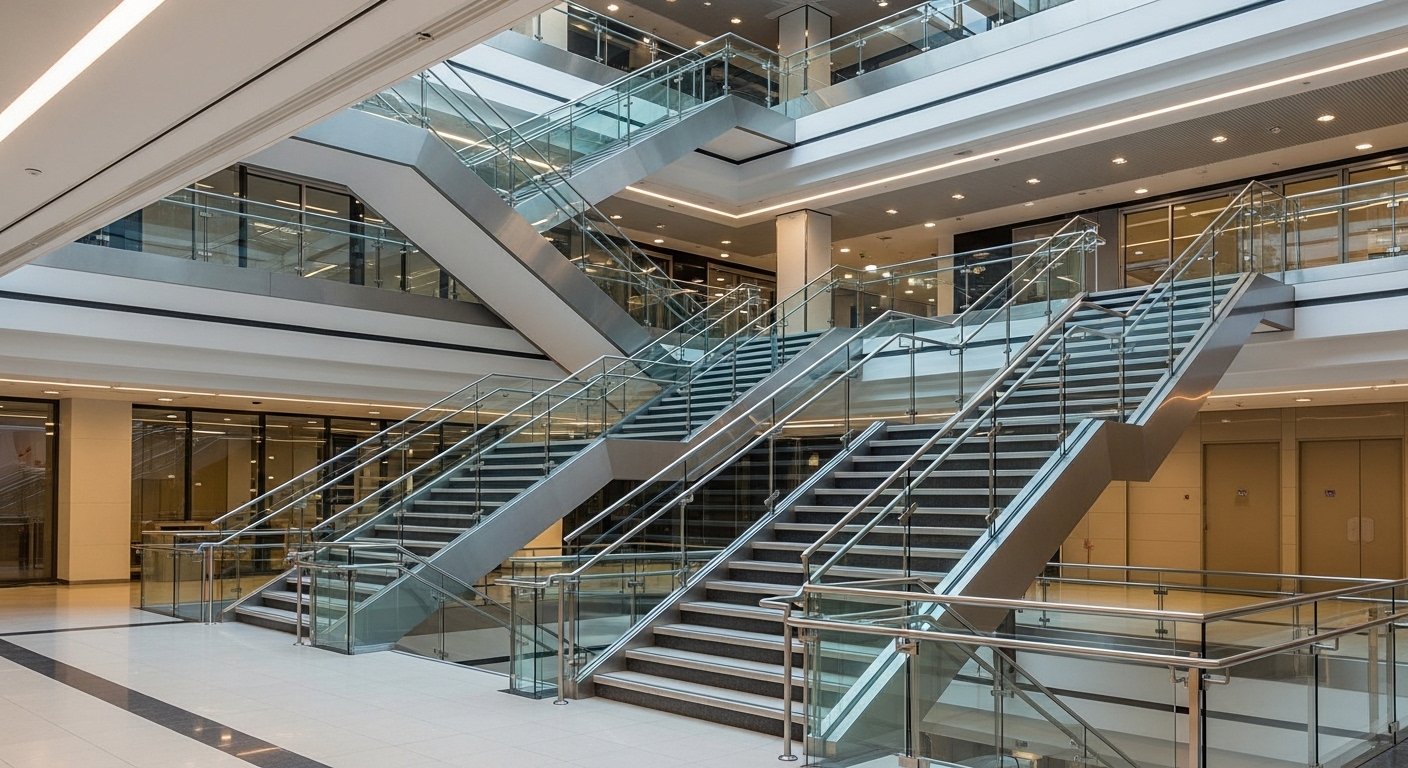
Railings India manufactures commercial staircase railing systems from our Hyderabad production facility for builders, developers, EPC contractors, PMC consultants and procurement teams delivering offices, hotels, hospitals, IT parks, education campuses and industrial facilities. A staircase railing carries a different engineering and code burden than a balcony or terrace guard: it must satisfy continuous handrail-graspability requirements over a rake, resist point loads from occupants using it as an aid on every step, and -- on open-sided flights, atrium stairs and landings -- meet guard-height and opening-size rules that are checked against the approved architectural and structural drawings for that specific stair geometry.
This page is the Hyderabad city authority specifically for staircase railings as a procurement category -- covering straight flights, dog-legged (quarter-turn) stairs, spiral staircases, atrium feature stairs, fire escape stair routes and industrial access stairs, in glass, frameless glass, stainless steel and aluminium. It is deliberately distinct from our material-specific and application-specific Hyderabad pages: glass railings Hyderabad covers glass systems across all applications (stairs, atriums, balconies), frameless glass railings Hyderabad covers point-fixed and base-shoe glass engineering broadly, stainless steel railings Hyderabad covers metal balustrade and handrail systems broadly, and balcony railings Hyderabad covers the balcony-edge guard category specifically. Use this page when the brief is specifically "internal or external stair flight, which railing and handrail system, and what does the BOQ need to say."
National product engineering for staircase systems lives on staircase railings, with material and function depth on glass railings, handrails, aluminium railings and industrial safety railings. Capability and portfolio context: manufacturer credentials and projects.
Applications
Staircase railing scope varies widely by building type and stair function. Here are the programmes across India we support most frequently:
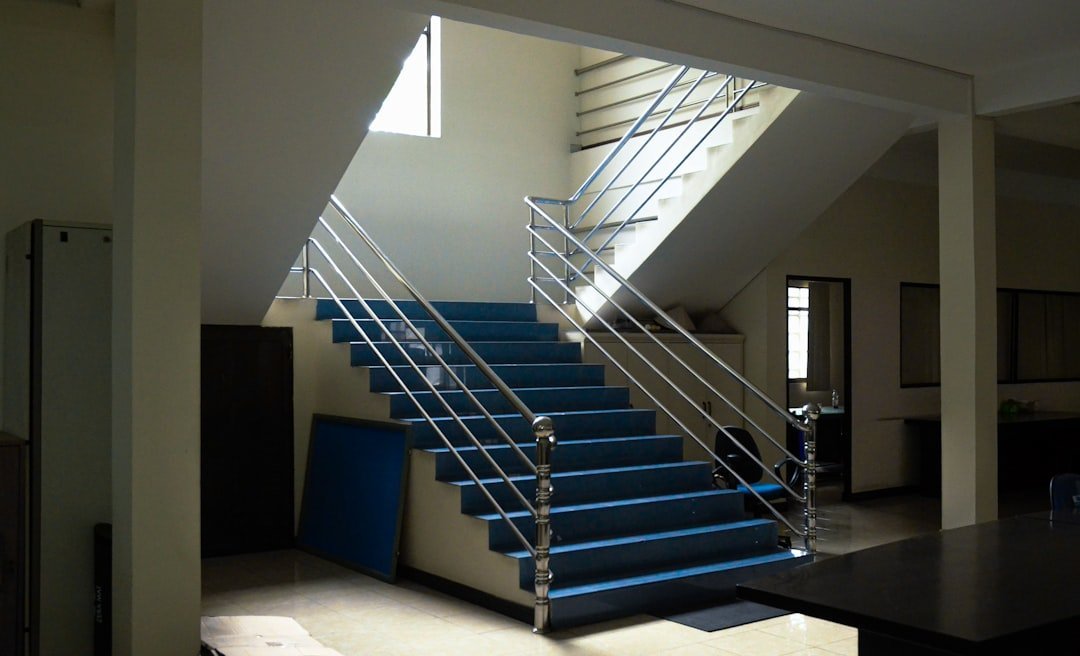
- Office and IT park core staircases -- fire stairs, feature staircases in double-height lobbies, and inter-floor connector stairs within HITEC City and Financial District campuses.
- Hotel and hospitality feature stairs -- lobby atrium staircases, spiral connector stairs between restaurant levels, and back-of-house service stairs.
- Hospital stairs and ramps -- code-driven fire stairs and internal connector stairs specified for institutional durability, cleanability and continuous graspable handrails.
- Education campus stairwells -- high-traffic stairs between classroom blocks and hostel/residential blocks, typically specified in durable SS or aluminium.
- Residential and mixed-use tower fire stairs and feature stairs -- code-mandated exit stairs plus, separately, architectural lobby feature stairs.
- Industrial and warehouse access stairs -- mezzanine access, plant-room stairs and fire escape routes within Patancheru and Jeedimetla estates.
Why Staircase Railings Matter
A staircase railing does more structural and safety work per linear metre than almost any other guard type in a building, because it combines a continuous handrail function with a fall-protection function on a sloped, stepped surface:
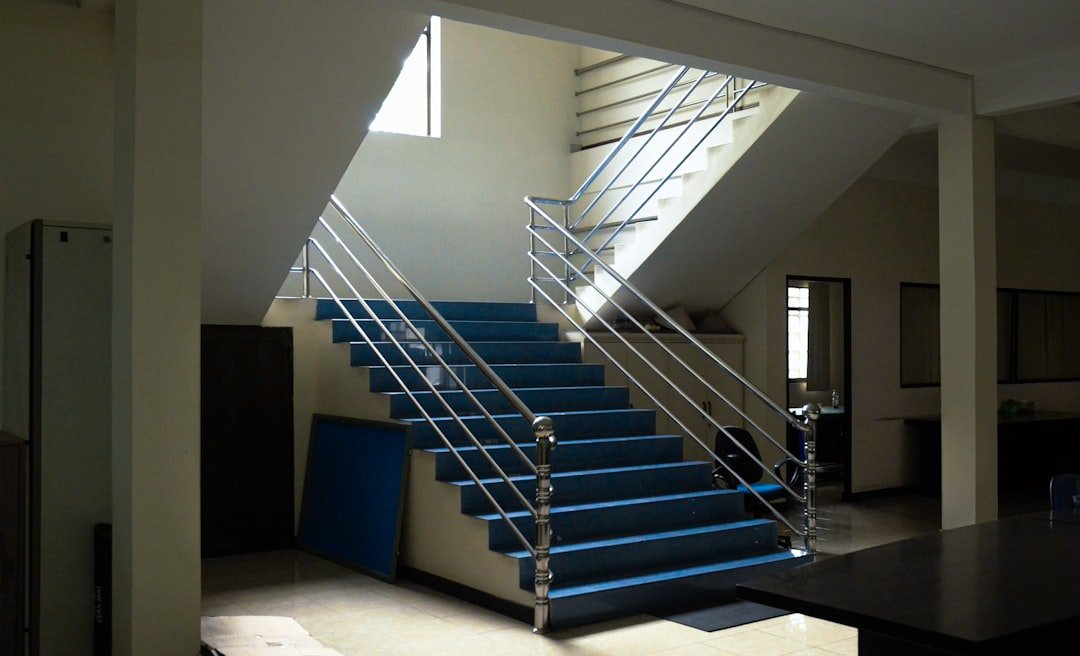
- Continuous grip and fall recovery -- the handrail is used on every step by every occupant, not just as an edge guard; graspability, continuity and end-return detailing matter more here than on a balcony rail.
- Fall protection on open-sided flights and landings -- the primary NBC 2016 function on stairs without a wall on one or both sides, and on landings adjoining an atrium or double-height void.
- Structural load path on a raked run -- posts and fixings on a stair string or landing slab see different load geometry than a level balcony edge, and this is checked on the approved structural drawing for that flight.
- Life-safety egress function -- on fire escape and code-mandated exit stairs, the railing and handrail are part of the means-of-egress detail, not a discretionary finish item.
- High-traffic durability -- stair rails absorb more incidental hand contact, bag and trolley knocks than most other guard types, so hardware grade and jointing quality carry real maintenance consequences.
- Architectural statement in double-height spaces -- atrium and spiral feature stairs are frequently the single most photographed interior element in a hotel or corporate lobby, adding a design-optics dimension on top of the code requirements.
Types of Staircase Railings -- Overview
We manufacture four staircase railing system families from our Hyderabad production facility, applied across straight, dog-legged, spiral, atrium, fire escape and industrial stair configurations:
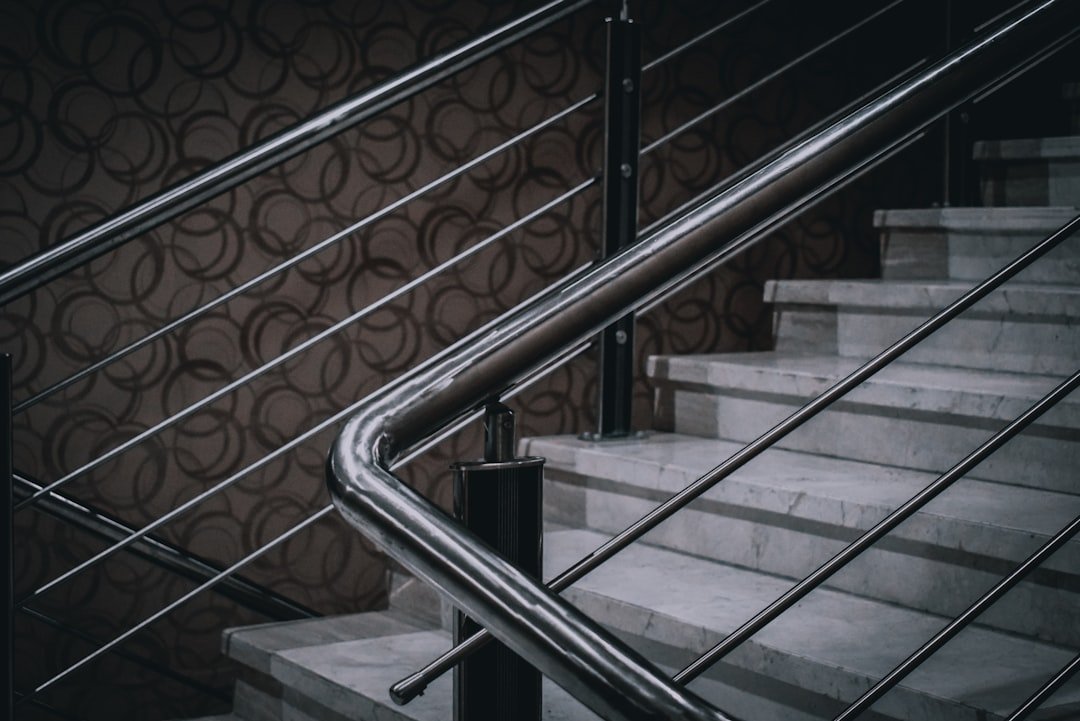
Framed or semi-framed toughened/laminated glass balustrades with a metal or glass-clamped top rail, common on lobby and feature stairs.
Base shoe or spigot-fixed glass following the stair string or landing edge with minimal visible metal -- the premium lobby stair option.
Baluster, wire-rope or glass-infill balustrades with a continuous SS handrail -- the workhorse choice for code stairs and high-traffic flights.
Anodised or powder-coated extrusion systems for lightweight, cost-efficient service stairs, mezzanines and repeat back-of-house flights.
Glass Staircase Railings
Glass staircase railings pair a toughened or laminated glass infill panel with a metal top rail and side posts (framed or semi-framed configuration), following the rake of the stair string or stepping at each tread -- a common commercial choice in lobbies and reception stairs where the brief wants a lighter, more transparent guard than solid metal balustrading.
- Glass type -- toughened (tempered) safety glass is the common commercial default; laminated glass is specified where fragment retention matters (public stairs, atrium-facing flights, higher floors).
- Framing -- top rail and posts typically in SS304/SS316 or powder-coated aluminium, sized to the approved structural calculation for that stair's rake and post spacing.
- Panel geometry -- glass panels can either rake continuously with the string (raked/sloped glazing) or step at each tread; the choice is an architectural decision confirmed on the shop drawing.
- When to choose it -- lobby and reception stairs, feature staircases in double-height spaces, and any flight where sightlines through the balustrade matter to the interior design.
Deeper glass engineering across all applications (not just stairs): glass railings Hyderabad and national glass railings.
Frameless Staircase Railings
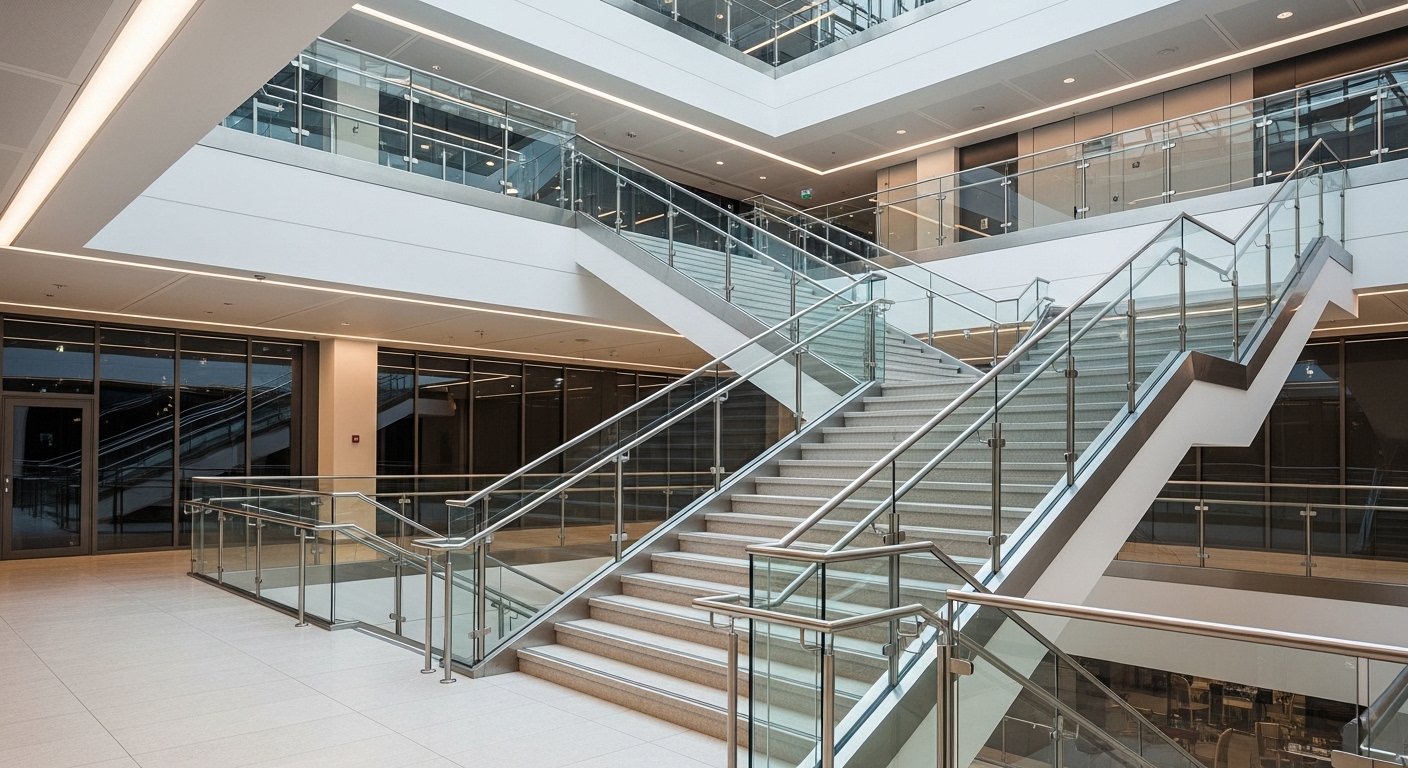
Frameless staircase railings remove the visible top-of-post framing seen in standard glass balustrades, using continuous raked base shoes or point-fixed spigots along the stair string or landing edge so the glass panel itself becomes the guard. This is the system most hospitality and corporate lobby projects reach for on feature staircases, because the flight is often the single most photographed element in the lobby.
- Raked base shoe -- a continuous channel running the rake of the string, suited to long, uninterrupted flight runs.
- Spigot -- point-fixed fittings at tread or landing edges that minimise continuous metal further, common on prestige lobby and atrium stairs.
- Glass build-up -- toughened or laminated to the approved specification; laminated builds are typically specified on higher-exposure or public-access flights.
- Handrail coordination -- a graspable top rail is added over the frameless glass where NBC or the occupancy brief requires continuous handhold (see Handrail Options below), without visually breaking the glass plane.
Full fixing-family engineering and Hyderabad wind context: frameless glass railings Hyderabad, base shoe glass railing system and spigot glass railing system.
Stainless Steel Staircase Railings
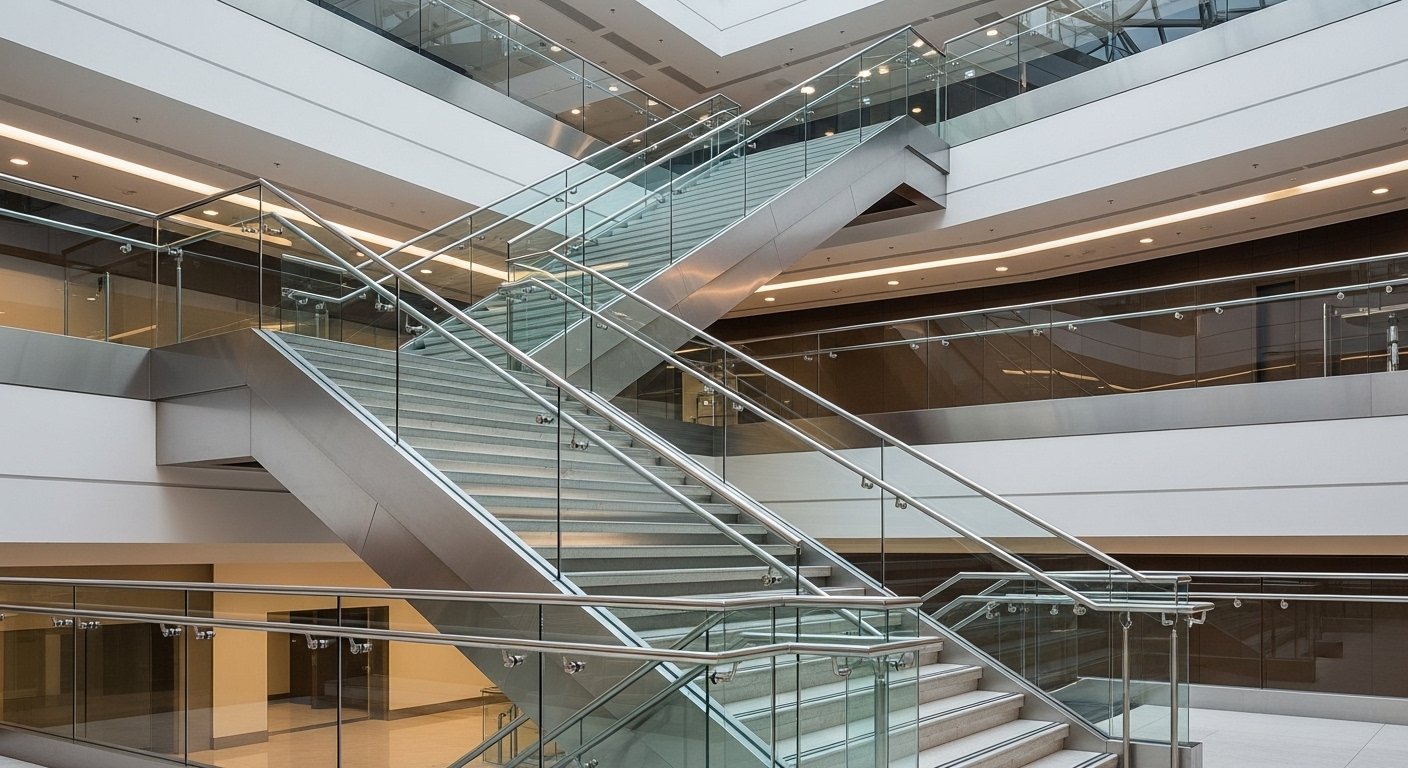
Stainless steel staircase balustrades -- vertical baluster, horizontal wire-rope infill, or SS-framed glass infill, always paired with a continuous SS handrail -- remain the workhorse choice for code-mandated fire stairs, high-traffic corridors and institutional flights where impact durability and low-maintenance cleaning matter more than an unbroken view.
- SS304 -- suits most internal, inland Hyderabad staircase applications with a routine cleaning schedule.
- SS316 -- specified for external fire escape stairs, aggressive wash-down regimes or chemically exposed industrial stair environments.
- Infill options -- vertical baluster (institutional, hospital-friendly and child-safe spacing), horizontal wire rope (contemporary lobby stairs), or glass infill within an SS frame (hybrid appearance).
- Finish -- satin (brushed) is the common low-glare commercial choice for handrails and balustrade framing; mirror polish is used selectively for premium interior-facing feature stairs.
Full metal balustrade and handrail engineering: stainless steel railings Hyderabad.
Aluminium Staircase Railings
Aluminium staircase railings use extruded post-and-rail systems, anodised or powder-coated for finish and corrosion resistance. They are a frequent value-engineering substitution on back-of-house stairs, mezzanine access flights and repeat service staircases across large commercial and industrial programmes where lighter weight, faster installation and lower per-flight cost matter.
- Anodised finish -- a hard, corrosion-resistant oxide layer suited to long-term exterior fire escape and mezzanine exposure with minimal maintenance.
- Powder coat finish -- wider colour range for interior colour-matching on back-of-house and service stairs; film integrity depends on correct pre-treatment and coat thickness.
- Infill options -- glass infill panels, aluminium picket, or perforated/louvre infill depending on the architectural or industrial brief.
- When to choose it -- service stairs, mezzanine access, industrial walkway stairs, or budget-sensitive back-of-house flights where dead-load reduction matters.
Product depth: aluminium railings and hybrid aluminium glass railing system.
Handrail Options
Unlike a balcony guard, a staircase railing is expected to provide a continuous graspable handrail in almost every occupancy -- it is the element occupants actually hold while moving up or down a flight. Handrail selection is coordinated with the balustrade material but specified separately for grip profile and continuity:
- SS round or square-profile top rail -- the common commercial default over glass or baluster infill, sized for a comfortable, continuous grip along the full rake.
- Wall-mounted handrail brackets -- used on stairwells where one or both sides run against a wall, common on fire escape and code-mandated exit stairs.
- Aluminium cap rail -- lighter-weight option coordinated with aluminium balustrade systems on service and industrial stairs.
- Continuity and end returns -- handrails are detailed to run continuously through landings and turns wherever the approved drawing calls for it, with rail ends returned to the wall or post to reduce snag risk -- a detail reviewed with the architect for each stair configuration.
- Grip diameter and clearance -- profile diameter and wall clearance are confirmed against the project's accessibility and code requirements rather than a single fixed catalogue dimension.
Full handrail product range: handrails.
Straight Stair Systems
Straight flights are the most common commercial stair configuration -- a single uninterrupted run between two floor levels, or between a floor and a landing. Railing engineering for straight stairs is comparatively straightforward, which makes them the default proving ground for material choice on a project:
- Consistent post spacing -- evenly spaced posts along a single rake simplify both structural calculation and fabrication compared with turning or curved stairs.
- Common in fire stairs and back-of-house cores -- most code-mandated straight-run exit stairs are specified in SS or aluminium for durability and cost efficiency.
- Common in feature lobby stairs -- long straight flights in double-height lobbies are a frequent glass or frameless glass application where sightline matters.
- Handrail continuity -- the simplest configuration for achieving a fully continuous, uninterrupted graspable handrail along the entire rake.
Dog-Legged Stair Systems
Dog-legged (quarter-turn or half-turn) stairs are the most common configuration in Hyderabad's commercial and residential stairwell cores -- two flights connected by an intermediate landing, turning 180 degrees within a compact stairwell footprint. They introduce two railing-specific considerations that straight flights do not:
- Landing guard continuity -- the balustrade and handrail must transition cleanly from the raked run to the level landing guard without a gap in protection at the turn.
- Handrail transition detailing -- where the handrail changes from sloped to level (and back to sloped on the return flight), the transition fitting or bend is a fabrication detail confirmed on the shop drawing for smooth, snag-free grip continuity.
- Well opening guard -- the open stair well between the two flights (where present) requires its own guard detail per the approved drawing, particularly at the landing edge facing the well.
- Efficient for stairwell cores -- this configuration remains the standard choice for enclosed fire stairs and back-of-house connector stairs across India commercial buildings because of its compact footprint.
Spiral Staircases
Spiral staircases are almost always an architectural feature rather than a code-mandated exit route, and their railing engineering follows accordingly -- every post sits at a slightly different angle around the central stringer or column, so the balustrade and handrail are fabricated as a curved, coordinated assembly rather than a run of identical straight sections.
- Curved handrail fabrication -- the handrail is bent or segmented to follow the helix continuously; this is a bespoke fabrication step, not a stock extrusion run.
- Post angle and infill -- posts and glass or baluster infill panels are each individually dimensioned to the stair's rise-per-step and turn radius.
- Common applications -- hotel lobby feature stairs, duplex/triplex residential connector stairs, retail double-height display stairs and compact mezzanine access where a straight or dog-legged stair will not fit the footprint.
- Material choice -- glass and frameless glass are popular for the design-forward feature application; SS and aluminium spiral stairs are used for compact industrial or mezzanine access where appearance is secondary to footprint efficiency.
Because every component is project-specific, spiral staircase railing packages are quoted and drawn individually rather than against a standard catalogue configuration -- radius, rise and turn direction are confirmed before fabrication.
Atrium Staircases
Atrium staircases sit within a double- or triple-height void and are visible from multiple floors at once, which raises the design and safety stakes simultaneously. These are frequently the flagship architectural element in a corporate campus lobby, hotel atrium or mall -- and also carry the most conservative open-edge guard requirements because the fall height at the landing or void edge can be significant.
- Void-edge guarding -- landings and mezzanine edges facing the atrium void are guarded per the approved drawing, which typically calls for a higher open-edge guard than an internal handrail-only condition (see Handrail Options and the NBC FAQ below).
- Sightline priority -- frameless or minimally framed glass is the common choice, since the atrium stair and void guard are designed to be seen from every level, not screened.
- Wind and pressure consideration for open atria -- where an atrium is naturally ventilated or partially open to exterior conditions, any wind-pressure effect on the glazing is assessed by the project structural engineer under IS 875 (Part 3) for that specific void geometry -- not assumed from a generic balcony calculation.
- Coordinated lighting and handrail detailing -- atrium stairs often integrate handrail lighting or feature hardware; these coordination details are confirmed on the architect's shop drawing package.
Fire Escape Stair Railings
Fire escape and code-mandated exit stairs prioritise reliability and durability over appearance. These are the flights building occupants may need to use under stress conditions, so railing and handrail detailing follows the fire and life-safety intent of the approved drawings closely:
- Continuous, unobstructed handrail -- a graspable rail on both sides is common on wider fire stairs; continuity through landings and turns is prioritised over decorative interruption.
- Material selection -- stainless steel is the common choice for internal fire stairs; SS316 or hot-dip galvanised steel is used for external fire escape stairs exposed to weather.
- Robust, low-maintenance detailing -- baluster infill (rather than glass) is typically specified for external fire stairs, avoiding glass replacement logistics on an emergency egress route.
- Code compliance is drawing-led -- exact handrail height, guard height and baluster spacing for fire escape stairs follow the approved fire and structural drawings for that project's occupancy classification -- this page does not substitute for the project's fire consultant sign-off.
Industrial Stair Railings
Industrial stair railings serve mezzanine access, plant-room stairs, catwalks and process-area egress across India's manufacturing and warehousing estates. The engineering priority shifts from appearance toward abrasion resistance, chemical exposure tolerance and rapid, cost-efficient installation across repeat mezzanine bays.
- Toe-plate and kick-plate detailing -- industrial stairs commonly add a toe-plate along open edges to stop tools or materials sliding off the tread or landing edge, a detail not typically needed on architectural stairs.
- Material -- mild steel with a protective coating, hot-dip galvanised steel or stainless steel depending on the process environment's corrosion and cleanability requirements.
- Standardised modular bays -- industrial stair railing runs are frequently supplied as repeat modular sections for mezzanine and catwalk programmes, speeding installation across large plant footprints.
- Cross-reference -- for the wider industrial guarding scope beyond stairs (mezzanine edge protection, walkway guards, machine-area barriers), see industrial safety railings.
Technical Specification Table
Indicative commercial matrix across the four staircase railing families. Project-specific values are confirmed on calculations and approved shop drawings before fabrication freeze.
| Material | Glass Thickness | Steel Grade | Aluminium Grade | Handrail Type | Finish | Fixing Method | Application | Recommended Environment | Maintenance | Compliance |
|---|---|---|---|---|---|---|---|---|---|---|
| Glass (framed) | ~10--12 mm+ toughened/laminated, per calculation | SS304/SS316 frame & hardware | -- | SS round/square top rail, wall bracket option | Clear/tinted/low-iron glass; satin/mirror metal | Framed post + top rail, raked or stepped panels | Lobby & feature staircases, straight & dog-leg flights | Internal, inland Hyderabad standard | Non-abrasive glass cleaner; seasonal seal check | NBC 2016 height (drawing); IS 875 Parts 3 & 5 (project SE) |
| Frameless / Semi-frameless glass | ~12 mm+ toughened/laminated, per calculation | SS304/SS316 spigot/base-shoe hardware | -- | Glass-clamped or post-mounted SS top rail | Polished/satin hardware; clear/low-iron glass | Point-fixed spigot or raked continuous base shoe | Premium lobby, atrium & spiral feature stairs | Internal; SS316 for atrium/exterior exposure | Glass cleaning; anchor & silicone inspection | NBC 2016 (drawing); IS 875 Part 3 & 5 (project SE) |
| Stainless steel balustrade | Optional glass infill ~8--10 mm | SS304 (internal) / SS316 (external/fire escape) | -- | Continuous SS round/square rail, wall or post mount | Satin (brushed) common; mirror selectively | Baluster post + rail, or wire-rope infill | Fire stairs, high-traffic, institutional & industrial flights | Internal standard; SS316 for external/chemical exposure | Soft-cloth wipe; avoid chloride bleach | NBC 2016 height (drawing); IS 875 Part 5 guard loads |
| Aluminium extrusion | Optional glass infill ~8--10 mm | -- | 6063-series architectural extrusion (typical) | Aluminium cap rail or coordinated SS insert rail | Anodised or powder-coated | Post-and-rail extrusion, bolted baseplate | Service stairs, mezzanine & industrial access flights | Cost-efficient internal/mezzanine use; confirm coat spec for exterior | Mild detergent wash; inspect fasteners | NBC 2016 height (drawing); IS 875 Part 5 guard loads |
Materials Guide
A short decision guide for procurement teams comparing staircase railing materials on the same Hyderabad campus:
| Material | Strongest for | Trade-off to weigh |
|---|---|---|
| Glass (framed) | Transparency with a defined architectural frame line on lobby stairs | More visible metal than frameless; seasonal cleaning needed |
| Frameless glass | Maximum sightline for feature, atrium and spiral stairs | Higher cost per metre; raked fixing precision is critical |
| Stainless steel | Durability under high traffic, fire stairs and repeated cleaning | Less transparent than glass; grade selection matters for external stairs |
| Aluminium | Lightweight, cost-efficient at scale across repeat service/mezzanine stairs | Lower perceived premium than glass/SS on flagship lobby stairs |
Surface Finishes
- Satin (brushed) stainless steel -- the common low-glare commercial finish for handrails and balustrade framing; hides fingerprints and light surface marking better than mirror.
- Mirror-polished stainless steel -- used selectively for premium interior-facing lobby and feature staircases.
- PVD coated stainless steel -- colour-finished handrail and hardware (e.g. bronze/black tones) where the architect specification calls a non-standard metal tone.
- Hot-dip galvanised steel -- corrosion protection for external fire escape and industrial stair applications.
- Anodised aluminium -- hard, corrosion-resistant oxide finish for long-term unmaintained mezzanine and fire escape exposure.
- Powder-coated aluminium -- wide RAL colour range for interior colour-matching; correct pre-treatment and film thickness govern service life.
- Glass finish options -- clear, tinted or low-iron (extra-clear) glass as the architectural specification requires.
Manufacturing Process
Staircase railing packages are manufactured from our Hyderabad production facility against approved shop drawings for each material family and stair configuration:
- Site survey and rake capture -- actual on-site rise, going and rake angle are captured or confirmed against drawings, since as-built stair geometry frequently differs slightly from design drawings.
- Drawing lock -- post/fixing centres, infill type, glass sizes (where applicable), handrail transition details and finish confirmed before fabrication release.
- Material processing -- glass cutting/edging/tempering or laminating; steel cutting, welding, curving (for spiral/curved handrails) and finishing; aluminium extrusion cutting and jointing -- per the locked schedule.
- Fitting and hardware preparation -- baseplates, spigots, brackets, base shoes and handrail transition fittings prepared and matched to panels/sections.
- Fit check -- critical interfaces, especially landing transitions and handrail bends, verified before phased Hyderabad dispatch.
- Protected packing -- edge and surface protection for road transit to site.
Quality Control
- Glass type, thickness and edge quality checked against the approved drawing (for glass and frameless staircase packages).
- Steel grade and weld/finish quality verified against the purchase order, including curved or bent handrail sections for spiral and dog-legged stairs.
- Aluminium extrusion profile, anodising/powder-coat film and jointing checked against specification (for aluminium packages).
- Handrail continuity and transition-fitting alignment verified before dispatch to reduce on-site rework at landings and turns.
- Fixing hardware, gaskets, packers and fasteners kitted per floor/flight release to match phased dispatch.
- Packing inspection before dispatch to Hyderabad sites.
Advantages -- Why Builders Across India Choose Railings India
- Local manufacturing base -- staircase packages coordinated from our Hyderabad production facility across all four material families and all six stair configurations.
- Single point for material comparison -- glass, frameless, SS and aluminium options quoted side-by-side against the same stair brief, rather than separate vendor conversations per material.
- Configuration range -- straight, dog-legged, spiral, atrium, fire escape and industrial stair railing experience under one manufacturing relationship.
- City + national depth -- this Hyderabad authority page is linked to full national system pages for engineering detail on each material.
- Documentation discipline -- NBC 2016 and IS 875 references, shop drawings and BOQ review for commercial orders.
- Phased site delivery -- staircase releases matched to core-wall handover and floor-by-floor site readiness where programmed.
Procurement Support
Structured support for EPC contractors, PMC consultants and procurement teams evaluating staircase railing packages:
- BOQ review -- material family, glass build-up, grade and missing handrail/accessory line items checked against the tender document.
- Quantity estimation -- running-metre and flight counts derived from stair sections, elevation drawings or unit-type schedules.
- Material selection -- glass vs frameless vs SS vs aluminium guidance by stair configuration, exposure, budget and appearance brief.
- Engineering consultation -- height, opening-size, handrail continuity, wind-load (where relevant) and fixing-centre discussion against the project's structural and architectural intent.
- Shop drawings -- DWG/PDF issued for approval before fabrication or glass-processing freeze, including handrail transition and spiral/curved geometry details.
- Tender support -- clarifications and technically-equivalent alternates where value engineering is invited.
- Value engineering -- material or fixing-family substitutions that reduce cost while protecting compliance intent.
- Commercial documentation -- quotations, purchase-order formats and delivery schedules aligned to PMC procurement workflow.
Project Workflow
- Enquiry -- share stair sections, elevations and preferred material family (or ask us to compare options across your straight, dog-leg, spiral or atrium flights).
- Technical review -- material, glass build-up or grade, stair configuration and handrail detailing assessed against the brief.
- Commercial proposal -- clarified inclusions/exclusions for supply.
- Shop drawing approval -- dimensions, fixing centres, handrail transitions and finish locked before fabrication freeze.
- Fabrication & dispatch -- manufactured and phased to site readiness, including any curved/spiral fabrication lead time.
- Handover pack -- drawings and documentation for PMC close-out on commercial orders.
Installation
Installation sequencing depends on material family, stair configuration and slab/string edge readiness:
- Survey the as-built rake, rise and going against the shop drawing before fixing; confirm edge distances and substrate condition on the string or landing slab.
- Set posts, base shoes, spigots or baseplates to approved centres along the rake; torque anchors per specification.
- Fit infill (glass, baluster, wire rope or picket) with correct packers, gaskets or bedding.
- Fix continuous handrail with correctly aligned transition fittings at landings, turns and curved sections; confirm grip continuity and end returns.
- Final clean and protection removal before PMC inspection and handover.
Maintenance
- Glass -- mild, non-abrasive cleaners; avoid metal scrapers on coated or laminated surfaces, especially on high-touch lobby stair panels.
- Stainless steel -- wipe handrails and balustrade framing with a soft cloth regularly given constant hand contact; avoid chloride-based bleaches that can pit or stain the finish.
- Aluminium -- wash with mild detergent; inspect anodised/powder-coat film for chips at high-contact points on service and mezzanine stairs.
- Handrail hygiene -- stair handrails see the highest hand-contact frequency of any railing element in the building; institutional and hospital projects often specify more frequent wipe-down schedules for this reason.
- Fire stair inspection -- periodic checks confirm handrail continuity, fixing security and unobstructed egress width remain intact on code-mandated stairs.
- Impact events -- isolate damaged panels or sections immediately; do not leave a compromised guard in service -- replace per safety protocol.
Industries We Serve
Each industry brings different code, hygiene, load and finish priorities. BOQ review and shop drawings confirm the correct system family before fabrication for programmes across India.
Cities We Serve
Railings India fabricates and supplies railing systems for commercial, institutional and industrial programmes across India. Project teams in major metros and growth cities typically engage us for BOQ review, material selection, shop drawings and factory fabrication before site installation.
Cities we regularly support include Hyderabad, Bengaluru, Chennai, Mumbai, Pune, Delhi NCR, Ahmedabad, Surat, Jaipur, Lucknow, Kolkata, Vijayawada, Visakhapatnam, Kochi, Coimbatore and Nagpur -- along with satellite towns and industrial corridors serving those metros.
Nationwide supply does not imply a local branch in every city. Engineering consultation, documentation and fabrication are coordinated from our Hyderabad production facility, with dispatch and installation support aligned to each project's programme.
States We Serve
- Telangana -- Hyderabad and surrounding industrial / IT corridors.
- Andhra Pradesh -- Vijayawada, Visakhapatnam and coastal / inland commercial programmes.
- Karnataka -- Bengaluru and adjoining industrial belts.
- Tamil Nadu -- Chennai, Coimbatore and institutional campuses.
- Kerala -- Kochi and commercial hospitality corridors.
- Maharashtra -- Mumbai, Pune, Nagpur and western industrial estates.
- Gujarat -- Ahmedabad, Surat and manufacturing hubs.
- Odisha / West Bengal -- Bhubaneswar corridor and Kolkata commercial programmes as project schedules require.
- Delhi NCR -- Delhi, Gurugram, Noida and adjoining institutional / commercial packages.
State coverage is demand-led. We do not claim warehouses or sales offices in every state -- only factory-backed supply and documentation for awarded programmes.
Nationwide Manufacturing & Supply
Railings India manufactures railing and related architectural metal / glass systems from our Hyderabad production facility for projects across India. We do not claim a branch network in every city -- we claim factory fabrication, engineering documentation and coordinated supply against approved drawings.
In-house cutting, welding, finishing and assembly to approved shop drawings.
Line-item review before order release to reduce site variation.
System selection against NBC 2016 and IS requirements confirmed on project drawings.
Fabrication and fixing drawings for PMC / consultant approval.
Glass, SS, aluminium, MS/HDG and hybrid packages matched to environment.
In-process checks before dispatch, with independent lab testing arranged where a project specifies it.
Dispatch and phased delivery aligned to contractor programmes across India.
Sequencing with civil, facade and interior trades on multi-block sites.
Quotations, schedules and handover packs for EPC / PMC procurement files.
FAQs -- Staircase Railing Manufacturer Hyderabad
1. Who manufactures staircase railings in Hyderabad?
Railings India manufactures commercial staircase railing systems from our Hyderabad production facility for builders, developers, EPC contractors, PMC teams and procurement buyers.
2. What staircase railing systems do you supply in Hyderabad?
Four system families: glass (framed), frameless/semi-frameless glass, stainless steel balustrades and aluminium extrusion systems -- selected against budget, exposure, stair configuration and appearance brief.
3. Which stair configurations do you cover -- straight, dog-leg, spiral, atrium?
All of them. We engineer and fabricate railing and handrail packages for straight flights, dog-legged (quarter/half-turn) stairs, spiral staircases, atrium feature stairs, fire escape stair routes and industrial access stairs.
4. How are wind loads handled for open-sided or atrium staircases in Hyderabad?
Where a staircase or atrium void guard is exposed to wind (open-sided flights, naturally ventilated atria, external fire escape stairs), loads are calculated project-by-project under IS 875 (Part 3), using basic wind speed, terrain category, topography and height factors confirmed by the project structural engineer for that specific stair and void geometry. We do not apply a single fixed wind-zone assumption to every Hyderabad staircase package.
5. What handrail and guard height applies per NBC 2016?
Handrail and guard height follow NBC 2016 for the occupancy and stair type shown on the approved drawings, with handrail height typically measured from the nosing line of the tread. Typical code bands (for example around 900 mm for a stair handrail and around 1050 mm for an open-sided or atrium-facing guard) are starting references only -- the project's approved drawing and current code edition govern the final dimension.
6. What glass thickness is used for staircase railings?
Many commercial staircase packages start around 10--12 mm toughened glass, with laminated or thicker builds where span, panel geometry (raked vs stepped) or fragment-retention requirements demand it. Thickness is locked by calculation, not a fixed catalogue size.
7. Toughened or laminated glass for stair balustrades?
Toughened (tempered) safety glass is the common commercial default. Laminated glass is preferred where fragment retention matters -- public-access stairs, atrium-facing flights, or higher floors -- per the project specification.
8. SS304 or SS316 for staircase railings in Hyderabad?
SS304 suits most internal, inland Hyderabad staircase applications with routine cleaning. SS316 is recommended for external fire escape stairs, aggressive wash-down or chemically exposed industrial stair environments.
9. Do you supply aluminium staircase railings?
Yes. Anodised or powder-coated aluminium extrusion systems are supplied for lightweight, cost-efficient service stairs, mezzanine access and industrial back-of-house flights.
10. Do spiral staircases need special railing engineering?
Yes. Every post and handrail segment on a spiral stair sits at a slightly different angle around the central stringer, so the balustrade and curved handrail are fabricated as a bespoke, individually dimensioned assembly rather than a run of identical straight sections.
11. What's different about atrium staircase railings?
Atrium stairs and adjoining landings face a double- or triple-height void, so open-edge guard height and sightline priority are considered against the approved drawing for that specific void geometry -- frameless or minimally framed glass is common so the feature stair remains visible from every level.
12. What code applies to fire escape stair railings?
Fire escape and code-mandated exit stairs follow the project's approved fire and structural drawings for that occupancy classification, with continuity of the graspable handrail and robust, low-maintenance balustrade detailing prioritised over decorative treatment.
13. Do industrial stair railings follow different standards than architectural stairs?
Industrial stairs commonly add toe-plate detailing and prioritise abrasion and chemical resistance over appearance, but guard and handrail heights are still confirmed against the applicable code band and the project's approved drawing for that facility.
14. Do you provide BOQ review and shop drawings for staircase packages?
Yes. We review BOQs for material family, glass build-up, grade and missing handrail/accessory items, and issue shop drawings for approval -- including handrail transition and spiral/curved geometry details -- before fabrication freeze.
15. How do I start a Hyderabad staircase railing enquiry?
Share drawings or a BOQ via Get a Quote or Contact Us. Note preferred material family (glass, frameless, SS or aluminium), stair configuration (straight, dog-leg, spiral, atrium, fire escape or industrial) and whether the project needs BOQ review or a fresh proposal.
Related Products
Downloads Available On Request
Available on request for qualified commercial enquiries -- not published as placeholder PDFs:
- Typical staircase railing and handrail detail sheets by material family and stair configuration (after scope confirmation)
- Material selection notes (glass vs frameless vs SS vs aluminium for stairs)
- Shop drawing title-block samples, including handrail transition and spiral geometry references
- Cleaning and maintenance guidance by material
- Company capability statement via manufacturer credentials
Commercial CTA -- India Staircase Railing Enquiry
Share your Hyderabad stair sections and drawings for staircase railing packages -- straight, dog-leg, spiral, atrium, fire escape or industrial. We respond with material comparison (glass, frameless, SS, aluminium), a BOQ review and a commercial proposal suitable for EPC and PMC review.
Get a Quote Contact Us