2, 3 and 4-track aluminium sliding window systems for high-rise residential towers, commercial offices, hospitals and institutional buildings. 6063-T5 alloy. Custom sizes. Pan India supply.
Get a QuoteAluminium sliding window systems from Railings India are the most widely specified window type for high-rise residential towers, commercial offices and hospitality projects across India. Available in 2-track, 3-track and 4-track configurations with custom sizing for any opening. Manufactured in 6063-T5 architectural alloy with EPDM weather seals and stainless steel rollers.
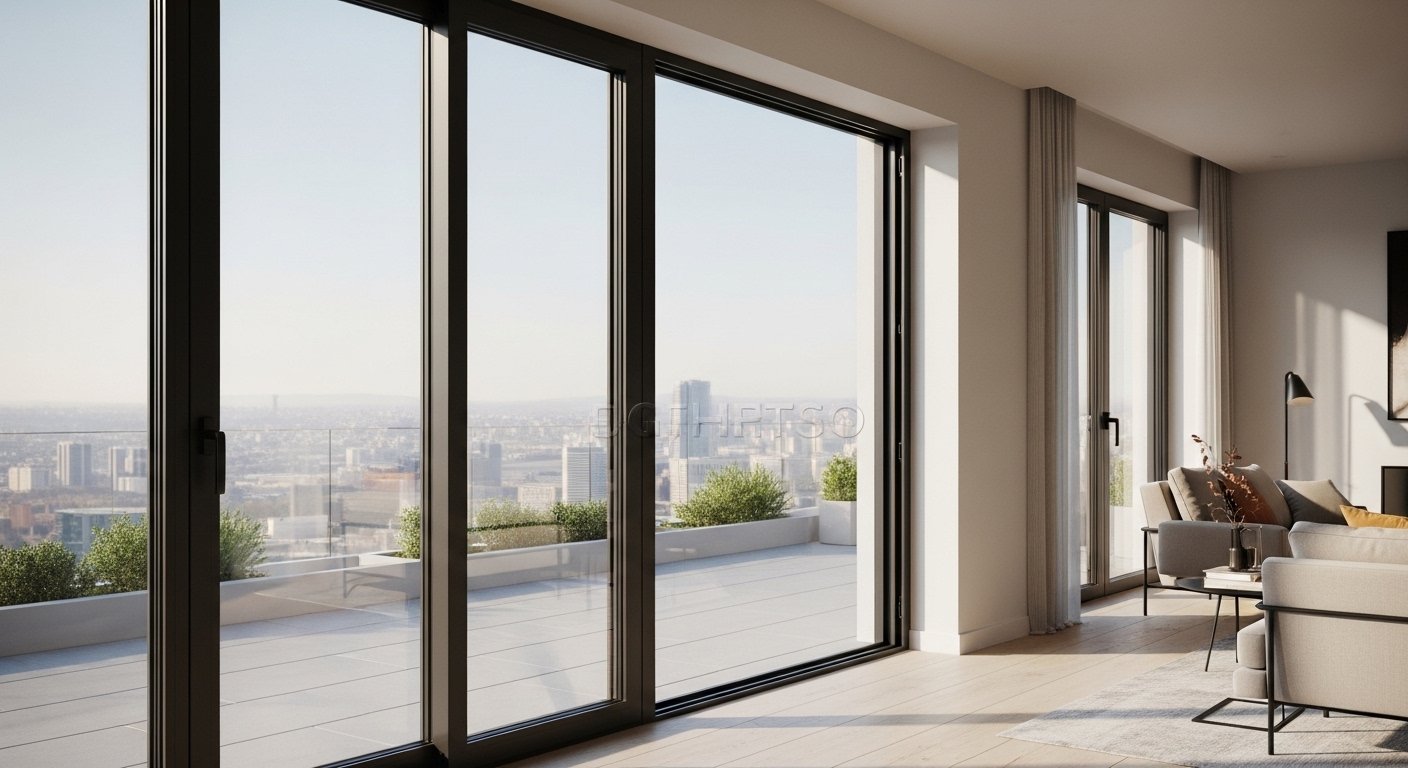
One fixed and one sliding panel. Standard for residential bedroom and kitchen windows, hospital patient room windows and small commercial openings.
Three panels on three tracks with up to two sliding panels. Allows wider opening for ventilation. Specified for living rooms, hospital wards and commercial office windows requiring partial opening control.
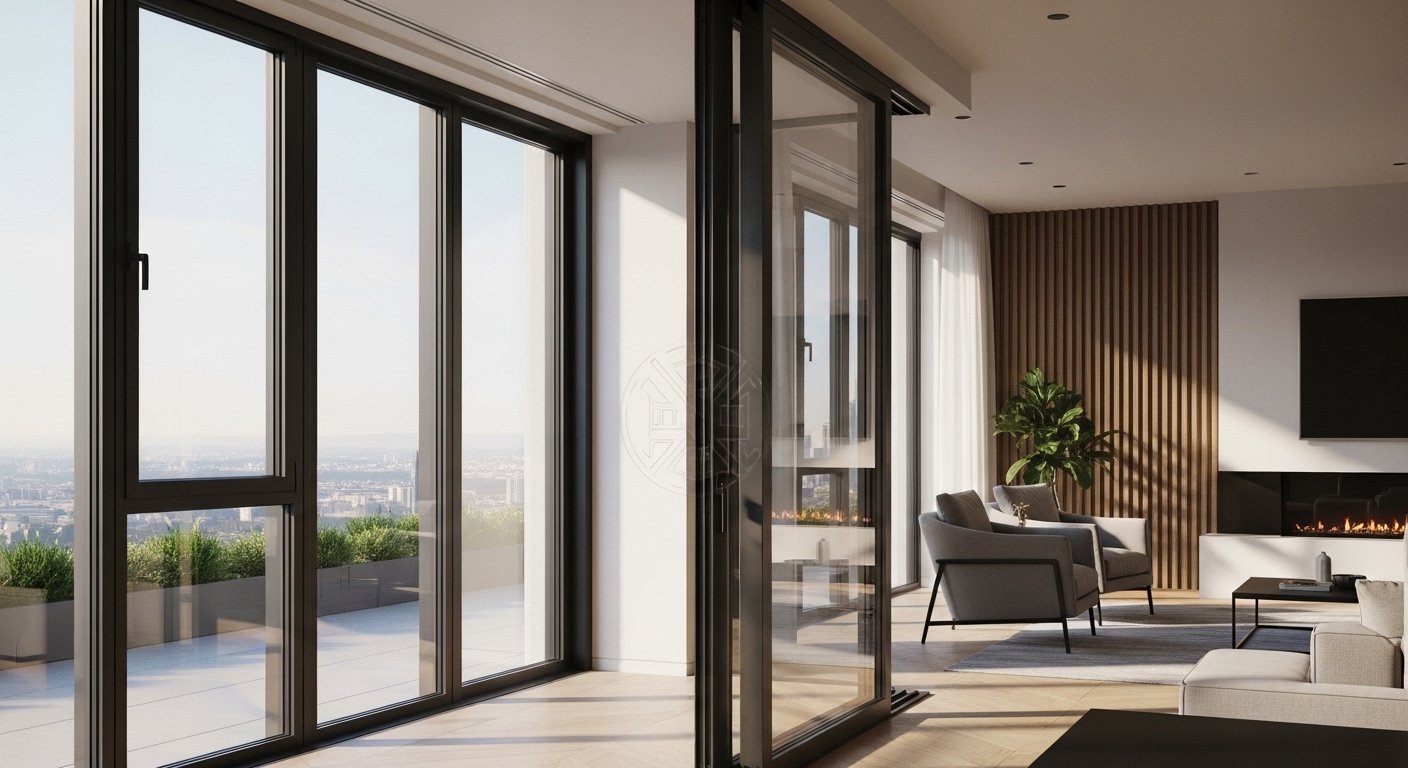
Four panels on four parallel tracks. Maximum glazed area with flexible opening configurations. Preferred for hotel rooms, premium residential apartments and large commercial office facades.
The standard window specification for RERA residential towers. 2 and 3-track systems for bedroom and living room applications. Bulk supply with phased delivery to match floor-by-floor construction programme.
Sliding windows with opening restrictors for patient safety in ward buildings. Easy-clean profiles. ECBC-compliant DGU available for energy-efficient hospital buildings.
Sliding windows for institutional residential blocks, hostel buildings and academic facilities. GeM portal supply. CPWD specification documentation.
4-track sliding windows for commercial office towers and IT park buildings. Colour-matched to curtain wall or cladding specification in any RAL powder coat.
Aluminium sliding windows are supplied single glazed or as double glazed units (DGU) depending on the building's energy requirement. Single glazing in 5mm or 6mm toughened glass suits naturally ventilated residential buildings. For air-conditioned commercial offices, hospitals and ECBC-regulated buildings, double glazed units with a 4-12-4mm or 5-12-5mm configuration reduce heat gain and cut HVAC load. The sealed cavity, optionally argon-filled, brings the unit U-value below 3.0 W/m²K and improves the acoustic rating by 4 to 6 dB over single glazing — useful for windows facing busy roads or metro corridors.
Every sliding window runs on stainless steel tandem rollers rated for the panel weight, with adjustable height to keep the sash square over its service life. The interlock and perimeter use co-extruded EPDM gaskets and TPE wool-pile seals that prevent water ingress and dust infiltration — important for projects in coastal and high-pollution urban environments. Multi-point cam locks engage the sash into the frame for security and to compress the weather seal. Insect mesh tracks can be integrated as a fourth track on 3-track systems.
| Performance | Single Glazed | Double Glazed (DGU) |
|---|---|---|
| U-value | 5.6 W/m²K | Below 3.0 W/m²K |
| Acoustic reduction | 26–28 dB | 32–34 dB |
| ECBC compliant | No | Yes |
| Recommended use | Naturally ventilated | Air-conditioned buildings |
Sliding window systems for high-rise towers are engineered to IS 875 Part 3 wind pressures, which increase with building height and exposure category. For towers above G+14, Railings India specifies reinforced sash sections and an increased interlock engagement to resist the higher design wind pressure and prevent air and water leakage under load. Test pressures and deflection limits are documented per project. Opening restrictors limiting sash travel to 100mm are fitted as standard on hospital and high-rise residential windows for occupant safety in line with NBC 2016 guidance.
Submit your project details and our technical team responds within 24 hours with system recommendations and pricing.
Request a Quote2-track sliding windows have two panels — one fixed, one sliding — sharing a common frame. This is the standard for bedroom and living room windows in residential towers. 3-track systems allow all three panels to be independently slid, providing full ventilation across the opening width — commonly specified for hospitals, schools and office buildings where cross-ventilation is a design priority. 4-track systems extend this to four panels and are used in wide openings where maximum ventilation area and flexibility in partially opening different panel combinations is needed.
Interlock seals between adjacent sliding panels are critical for weather performance and thermal insulation. Our multi-track systems use pile brush seals on the sliding panel vertical edges — self-adjusting as the pile compresses over time — with rubber compression seals at the frame ends. For DGU glazing on ECBC-compliant projects, the frame profile depth must accommodate the DGU unit thickness (typically 22–28mm overall) within the track system without reducing the sliding panel clear width below the specified opening.
Sliding window rollers are the most maintenance-sensitive component in the system — poor-quality rollers corrode, seize and cause panels to bind or derail within 2–3 years. We use SS 304 roller bodies with bearing-grade nylon or PTFE inserts on all systems, rated for the panel weight and a minimum 100,000 cycle life. For coastal installations, SS 316 rollers are standard — SS 304 in salt-air environments shows surface corrosion that increases rolling friction and accelerates wear.